
Deconstructivism's 2025 Resurgence: Fragmented Forms Redefine Architecture
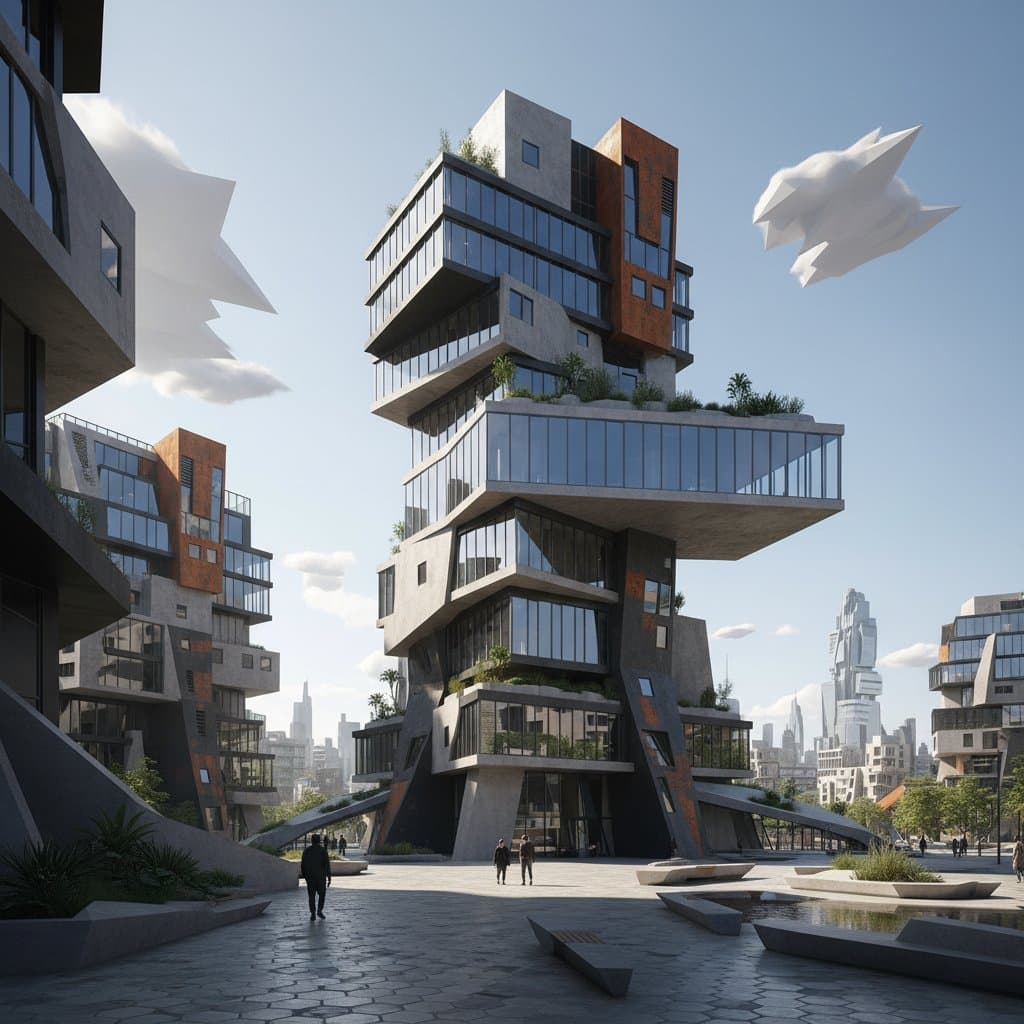
Picture a structure where surfaces intersect at unconventional angles, creating a sense of perpetual motion. Light refracts through tilted planes, casting ever-changing patterns that draw the eye and challenge perceptions. This captivating disarray defines deconstructivism, an architectural approach gaining fresh momentum in 2025.
Observers note the rise of jagged silhouettes in urban landscapes and dynamic facades in residential projects. Deconstructivism extends beyond experimental galleries into everyday environments, from office towers to family homes. Developers and designers leverage it to convey innovation and cultural relevance.
The Appeal of Disrupted Harmony
Deconstructivism disrupts conventional symmetry to evoke emotion and introspection. It rejects rigid grids in favor of intersecting volumes that provoke curiosity. This style transforms spaces into interactive experiences, where irregularity fosters a deeper appreciation for form.
Individuals seek such designs to reflect personal narratives. The predictability of streamlined modernism yields to multifaceted expressions. Deconstructivism prompts reflection: Can beauty emerge from controlled disorder?
Origins of the Revival
Deconstructivism persisted in niche applications during periods dominated by sleek aesthetics. Architectural trends, however, favor periodic reinvention. Following an era of uniform designs, professionals and clients pursue vitality through asymmetry.
Several factors fuel this return:
- Advanced digital tools. Parametric modeling software enables precise simulation of intricate geometries, streamlining design and construction.
- Innovative materials. High-strength composites, smart glazing, and prefabricated components support bold shapes without compromising durability.
- Societal shifts. A preference for authenticity in creative fields encourages designs that embrace imperfection and dynamism.
These elements produce buildings that appear deconstructed yet operate seamlessly.
Geometry in Motion: Exterior Dynamics
Approach a deconstructivist exterior, and observe how planes shift to manipulate light and shadow. Cantilevered sections create depth, while faceted surfaces reflect surroundings in mosaic-like fragments. This interplay ensures each perspective reveals new details.
Interiors extend the concept with offset walls and spiraling elements. Engineers ensure stability through reinforced joints and load-bearing calculations. For residential adaptations, fragmented patterns appear in scaled forms, such as angled cabinetry or irregular flooring that enhances spatial interest.
Balancing Aesthetics with Functionality
Deconstructivism demands integration of visual impact and user comfort. Bold forms require thoughtful execution to avoid disorientation.
Consider these strategies:
- Material contrasts. Combine sharp lines with organic textures like reclaimed timber or soft upholstery to add warmth.
- Color restraint. Limit schemes to neutrals or monochromes, allowing geometry to dominate without visual overload.
- Spatial navigation. Design pathways with subtle cues, using furniture to direct flow in non-linear layouts.
- Illumination techniques. Employ layered lighting to emphasize contours, such as linear LEDs along edges for dramatic effect.
Successful implementations create immersive environments that invite habitation.
Builder Perspectives on Complex Projects
Construction professionals previously viewed angular designs as labor-intensive due to bespoke fabrication. Recent advancements in modular assembly and digital fabrication reduce timelines and costs. Teams now integrate these methods to deliver projects efficiently.
Commercial applications highlight branding through standout silhouettes. Residential endeavors offer bespoke sanctuaries that stand apart. Specialists in metalwork and glazing report increased inquiries, often collaborating from initial sketches to mitigate challenges.
Managing Budgets and Logistics
Angular constructions incur higher expenses from specialized engineering. Proactive measures keep costs in check.
- Modular fabrication. Assemble off-site components to minimize on-site adjustments and waste.
- Targeted applications. Focus fragmentation on high-visibility zones, maintaining simplicity elsewhere.
- Interdisciplinary involvement. Engage structural experts early to refine concepts and prevent costly revisions.
- Regulatory navigation. Consult code specialists for non-standard approvals, ensuring compliance from outset.
Structural integrity remains paramount, with rigorous testing for all elements.
Integrating Sustainability
Contemporary deconstructivism aligns with environmental goals, embedding efficiency into its forms. Tilted orientations optimize solar exposure, while protrusions serve as brise-soleil to control thermal loads.
Ventilation benefits from varied apertures that promote cross-breezes. Roofing configurations capture precipitation for reuse. Homeowners gain from systems that leverage geometry for reduced energy demands, such as passive shading that lowers cooling needs.
Regional Adaptations
Deconstructivism adapts to local contexts for relevance. Coastal regions feature wave-inspired cantilevers that withstand elements. Urban density inspires reflective towers that fragment city views.
Incorporate regional resources: aggregate-infused concrete for solidity or indigenous timbers for texture. This fusion of universal principles and site-specific details enhances accessibility.
Incorporating Elements at Home
Adopt deconstructivism incrementally without major overhauls.
- Outdoor enhancements. Install a slanted pergola to frame entrances or patterned screens for privacy.
- Indoor modifications. Introduce offset partitions or asymmetrical built-ins to alter room dynamics.
- Decorative integrations. Select angular fixtures and art that amplify the style's energy.
These additions infuse personality while remaining feasible.
Assembling Your Team
Deconstructivist endeavors require synergy between visionaries and technicians. Platforms like doricsouth.com link users with qualified professionals experienced in innovative builds. Profiles detail expertise, past works, and ratings to inform selections.
Homeowners benefit from streamlined matching, turning ambitious ideas into realized designs. Submit details at no cost to receive tailored proposals.
Experiencing the Finished Space
In a completed deconstructivist home, daily routines interact with the architecture. Sunlight traces paths across facets, evolving with seasons. Guests engage with the environment, sparking discussions on its inspirations.
Familiarity breeds affinity; the forms become intuitive extensions of lifestyle. Upkeep focuses on preserving surfaces that accentuate the design's essence.
Advancing Your Project
To initiate a deconstructivist transformation, outline your vision and connect with experts. Evaluate options based on feasibility and alignment with goals. This approach ensures a structure that embodies innovation while serving practical needs.