
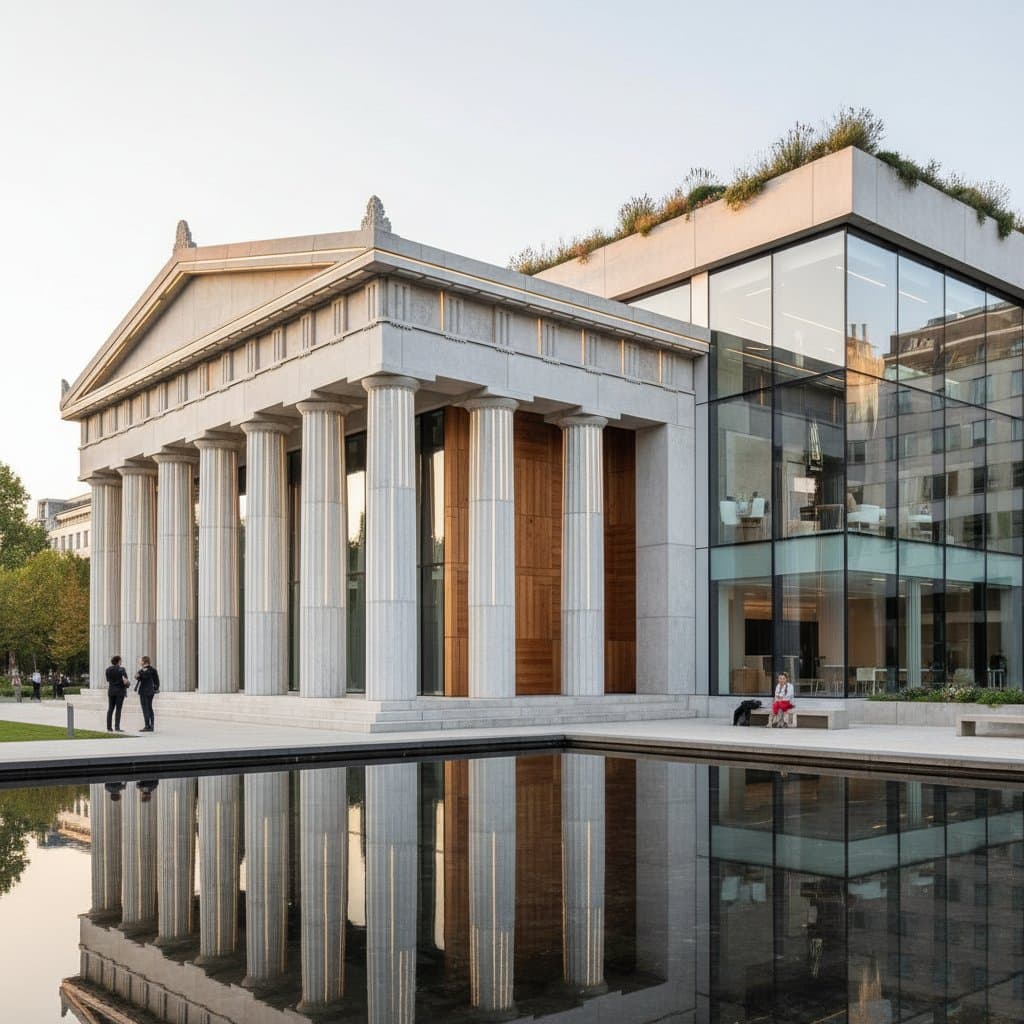
Modern Interpretations of Classical Heritage: Deconstructed Classicism
Homeowners and designers increasingly appreciate the enduring appeal of classical facades, characterized by columns, arches, and symmetry, alongside the vitality of clean lines, open spaces, and current materials. This combination yields Deconstructed Classicism, a style that preserves classical essence while introducing bold innovation.
Envision a space where a colonnade emerges from light and shadow instead of solid stone, or a pediment transforms into a geometric frame for a glass entrance. Such designs maintain classical craftsmanship and order, while incorporating modern technology and creativity to revitalize tradition.
Core Principles of Deconstructed Classicism
Deconstructed Classicism reinterprets classical architecture's fundamental language. It retains elements of proportion, balance, and ornamentation, but expresses them in contemporary forms, fostering a dialogue between historical and modern influences.
Designers extract the core ideas rather than duplicate features like columns or cornices. For instance, fluted patterns may appear in polished concrete instead of marble, and symmetrical layouts can incorporate asymmetrical glazing or sculptural lighting. This method sustains classical spirit without evoking mere nostalgia.
The style thrives on the interplay of permanence and reinvention, honoring classical discipline while permitting flexibility and experimentation. It values imperfection and process alongside precision and formality.
Relevance in Contemporary Design
Evolving design preferences lead homeowners and architects to integrate heritage with progress. Classical design offers reassurance, yet strict replication often seems detached from daily life. Deconstructed Classicism achieves equilibrium, supporting open-plan layouts, sustainable materials, and efficient systems, all within a framework of enduring harmony and proportion.
In urban settings, this hybrid style links new constructions to historic districts, respecting context while advancing forward. For renovations of older homes, it enables updates without diminishing original character. New projects gain depth and timeless quality without imitation.
Essential Features of Deconstructed Classical Design
-
Fragmented Symmetry
Classical structures emphasize rigid symmetry. Deconstructed Classicism employs proportion for balance, avoiding exact mirroring. Facades appear structured yet subtly offset, generating interest without disorder. -
Material Contrasts
Beyond stone and plaster, designs blend concrete, glass, and steel with heritage finishes. Bronze accents may mimic moldings, or limestone panels adjoin brushed aluminum, highlighting both legacy and progress. -
Abstracted Details
Ornamentation evolves into texture, pattern, or shadow play. A simple wall panel might feature subtle fluting from classical columns, with lighting enhancing depth and rhythm akin to traditional carvings. -
Layered Transparency
Traditional solidity gives way to lightness through glass walls, open atriums, and reflective elements. These features dissolve indoor-outdoor divides, letting daylight reshape geometry dynamically. -
Experiential Spaces
Rooms prioritize narrative over utility. A corridor may evoke a colonnade via rhythmic supports rather than columns. Ceilings could arc softly, referencing domes, with each element contributing to a cohesive story.
Implementing Deconstructed Classicism in Residences
These principles adapt well to homes of any scale when applied deliberately.
-
Establish Structural Balance
Examine room connections. Introduce proportion through aligned windows or doors for rhythm, or install shelving to act as a contemporary entablature, anchoring the area visually. -
Select Complementary Materials
Base designs on tactile options like concrete, timber, plaster, or stone, which echo classical roots. Combine with matte metals or translucent glass to spark interaction between eras. -
Incorporate Restrained Details
Opt for shadow lines or recessed lights to define ceilings instead of ornate moldings. Fluted panels or textured glass substitute for carvings, preserving artisanal feel. -
Leverage Lighting for Form
Use fixtures to direct light onto shapes and surfaces, mimicking structural elements. Harness natural illumination through layered materials to integrate it into the overall composition. -
Curate a Thoughtful Color Scheme
Draw from neutral classical palettes, enhanced by modern accents. Tones such as deep charcoal, aged brass, and soft limestone foster timelessness with subtle variation.
Prioritizing Craftsmanship
Craftsmanship anchors even modern expressions. Collaborations with skilled artisans reinterpret traditional methods innovatively, such as creating subtle plaster reliefs from ancient patterns or crafting steel screens that suggest classical lattices.
This focus ensures surfaces convey narrative through touch and texture, emphasizing human involvement. While machines deliver accuracy, artisans infuse warmth and genuineness.
Integrating Sustainability
Deconstructed Classicism aligns with sustainable practices through classical emphasis on durability and proportion, supporting long-term efficiency. Reuse of materials, incorporation of reclaimed stone, or retention of existing frameworks minimizes waste and conserves resources.
Emotional sustainability matters equally; well-proportioned environments endure stylistically. Rooting modern designs in classical order ensures relevance across generations.
Budgeting and Implementation Strategies
This design approach offers cost flexibility. Concentrate efforts on focal points like an entryway or feature wall to convey the theme effectively.
Select affordable alternatives: concrete or plaster simulates stone's weight at lower expense. Engage local experts in heritage work for material advice and regulatory guidance.
Incorporate efficient building techniques to cut labor while upholding quality. For historic alterations, secure permits via authorities and employ licensed professionals versed in codes and safety.
Emotional Impact of the Design
Architecture shapes daily emotions. Deconstructed Classicism provides calm through ordered creativity, yielding grounded yet expansive environments that blend tradition with freedom.
Residents often sense a profound link to history, as spaces validate the past while enabling present vitality. This resonance elevates the style to a mindful living philosophy.
Real-World Applications
Examples span homes and public venues. A civic structure might feature a glass front tracing a classical portico, or a townhouse could use plaster arches with steel supports.
Details like inset panels or slim pilasters subtly nod to heritage. Professionals tailor designs to client visions, incorporating local motifs or artistic influences for rooted, fresh outcomes.
Steps to Realize Your Vision
Identify personal heritage connections, whether neighborhood styles, original home features, or affinity for order. Collaborate with designers skilled in blending eras.
Gather inspirations from sites and observe light-structure interactions. For execution, connect with verified experts via Doric South, a platform linking clients to reliable professionals in design and renovation.
Deconstructed Classicism views architecture as an ongoing exchange, turning spaces into narratives of continuity. It upholds historical integrity while crafting personalized, enduring homes.