
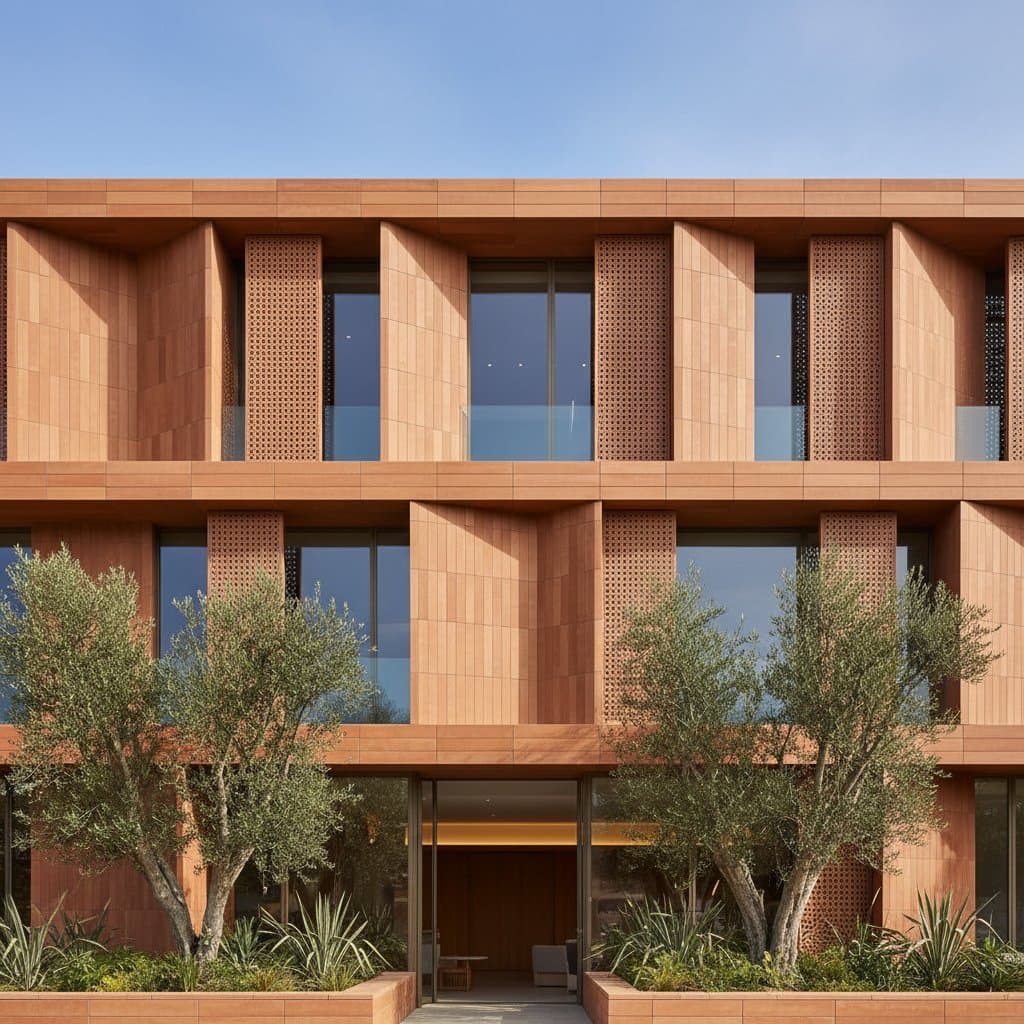
Earthy Terracotta: Reviving Clay in Modern Architecture
New buildings increasingly feature warm, natural tones rather than reflective glass or stark metal surfaces. Terracotta leads this shift, drawing from its historical roots in older homes and tiled roofs. Architects now integrate it through innovative applications that deliver a grounded aesthetic, blending freshness with enduring style.
For renovations or new constructions, terracotta merits consideration as a core material. It provides durability, sustainability, and adaptability for facades, floors, and accents. A clear grasp of its unique properties equips designers to incorporate it effectively into contemporary projects.
Why Terracotta Is Making a Comeback
Terracotta derives from natural clay, shaped and fired at intense temperatures, earning its name as baked earth. This process has supported its use in pottery, tiles, and sculptures for centuries. Today, architects redefine its function to meet the demands of modern structures.
Designers prioritize materials that convey authenticity and regional ties. While glass and steel have prevailed, they often result in impersonal environments. Terracotta counters this with inherent warmth and tactile depth. Its inherent color fluctuations ensure individuality, and it harmonizes seamlessly with wood, concrete, and stone.
Sustainability drives its resurgence as well. Clay abounds as a resource, and terracotta supports recycling efforts. Responsible production yields a reduced ecological impact versus synthetic alternatives. Furthermore, it moderates indoor temperatures and humidity levels, enhancing overall energy performance.
Where Terracotta Fits in Modern Architecture
Terracotta extends beyond rustic or Mediterranean motifs into minimalist and high-rise designs. Architects deploy it across diverse applications. The following examples illustrate its current integrations:
-
Facades and Cladding
Thin, modular terracotta panels now sheath entire exteriors. These components attach via engineered support frameworks, merging clay tradition with precise fabrication. Such systems range from moderate to elevated costs based on intricacy, yet they endure for decades with routine care. -
Feature Walls
Terracotta tiles or bricks impart texture to focal walls, indoors or outdoors. In living areas, an accent wall infuses warmth into subdued palettes. Patios benefit from its natural linkage to surrounding landscapes. -
Screens and Louvers
Terracotta fins or slats serve as shading elements, balancing privacy with ventilation and illumination. They generate dynamic shadows that evolve throughout the day. -
Flooring and Paving
Terracotta tiles remain ideal for durable, low-effort surfaces. Sealing prevents absorption of spills. Costs fluctuate with finish and dimensions, positioning it as an economical natural option. -
Artistic Details
Compact terracotta features, such as planters or trims, introduce personality without dominance. Pair them with plaster, glass, or metal to achieve equilibrium.
The Strengths and Challenges of Terracotta
Materials present distinct benefits alongside considerations. Awareness of these factors informs project suitability.
Pros
- Natural Beauty: Warm hues and nuanced textures enrich visual interest.
- Durability: High-fired clay withstands generations of exposure.
- Low Maintenance: Sealed surfaces resist discoloration, dampness, and infestations.
- Energy Efficiency: It retains warmth during cold seasons and cools in heat.
- Eco-Friendly: Derived from abundant clay, it recycles easily and poses no toxicity risks.
Cons
- Weight: Panels demand robust structural reinforcement.
- Installation Skill: Precise placement requires skilled labor.
- Porosity: Certain varieties retain moisture, necessitating seals in humid areas.
- Cost Variability: Bespoke forms or expansive applications elevate expenses.
Budget-conscious projects can incorporate terracotta selectively, applying it to highlights while simplifying broader elements.
How to Choose the Right Type for Your Project
Terracotta spans hand-molded tiles to engineered panels. Selection hinges on application and aesthetic goals.
-
For Exterior Walls or Facades
Opt for extruded or rain-screen panels, crafted for resilience against elements. Professional fitting ensures a streamlined appearance. -
For Interior Walls and Floors
Handcrafted tiles deliver artisanal appeal. Select matte variants for rustic vibes or glazed for refinement. Account for natural inconsistencies in tone and form during planning. -
For Decorative Features
Molded or sculpted pieces accentuate arches, boundaries, or hearths. Source from specialists for tailored results. -
For Outdoor Spaces
Pavers suit patios with their traction and aging grace, provided seals protect against weathering.
Consult suppliers on clay origins, firing specs, and upkeep protocols. Denser tiles from elevated temperatures excel in moisture-prone settings.
Installation and Maintenance Basics
Professional oversight proves essential for exterior or cladding uses to secure stability and protection. Key steps include:
- Preparation: Ensure substrates remain clean, arid, and firm.
- Adhesives and Mortar: Employ formulations suited to clay.
- Sealing: Choose permeable options to curb stains and uptake.
- Cleaning: Rely on gentle soaps and brushes, eschewing abrasives.
- Repairs: Swap damaged sections swiftly to avert subsurface harm.
Routine checks, biannual at minimum post-adverse weather, suffice for upkeep.
Balancing Cost, Effort, and Longevity
Initial investments in terracotta surpass those for vinyl or cement alternatives, yet longevity and minimal ongoing needs yield savings. Pricing tiers include:
- Basic tiles or bricks: Accessible per square foot.
- High-end facade systems: Premium per square foot, inclusive of labor.
- Custom decorative pieces: Valued by individuality and skill.
Self-directed projects economize through standard formats or targeted uses. Specialized crews command higher fees, but their proficiency mitigates errors.
Sustainability and Local Sourcing
Terracotta aligns with green construction via local clay utilization, minimizing transport. Efficient kilns or renewables temper energy demands in production.
Reclaimed pieces offer eco-advantages, repurposing salvaged items for patina. This approach diminishes landfill contributions.
Inquire into suppliers' practices for transparency. Regional sourcing fosters harmony with local terrains through tonal matches.
Design Inspiration and Style Ideas
Terracotta graces projects from residences to civic edifices. Consider these approaches:
- Minimalist Warmth: Pair sleek panels with stone or concrete for subtle invitation.
- Rustic Modern: Layer coarse textures with timber and steel accents.
- Urban Revival: Employ glazed panels to infuse vibrancy into masonry.
- Natural Blend: Integrate with gravel routes and indigenous flora.
- Interior Statement: Apply tiles to culinary or circulatory zones for organic infusion.
It complements bamboo, cork, or salvaged lumber, forging unified, serene compositions.
Integrating Terracotta Effectively
Commence with modest implementations, such as boundary features or surrounds, to gauge its impact. This trial informs broader adoption.
Evaluate samples under ambient lighting, assessing tactility and shades. Align selections with spatial demands.
Through deliberate planning, terracotta infuses enduring vitality into builds and refreshes.