
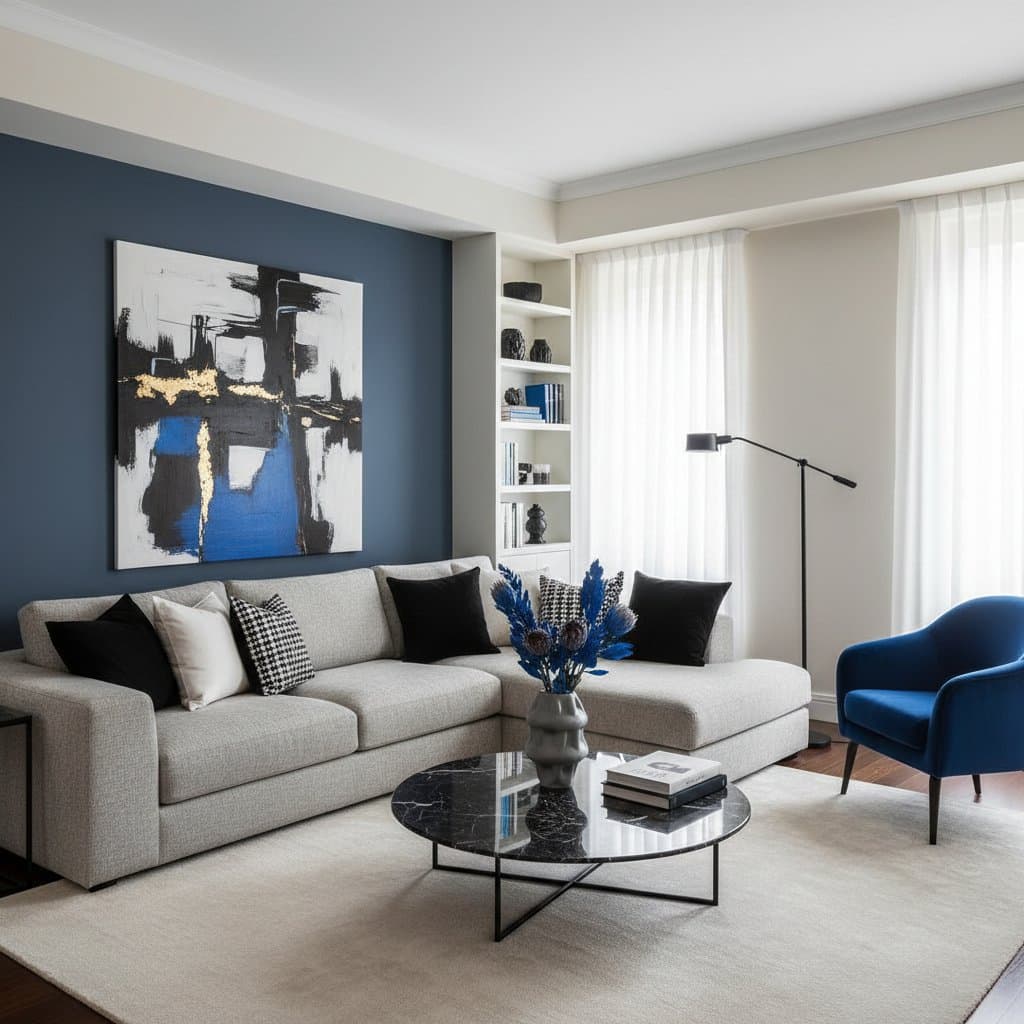
Monochrome Interiors Shine with Just One Bold Color
Examine a living room that appears orderly and unified yet lacks vitality. Numerous individuals select a neutral foundation for its sense of security, only to find the area devoid of character. Fortunately, introducing a single thoughtfully selected color alters the atmosphere entirely.
A monochrome setting enhanced by one striking accent delivers a pristine, contemporary appearance brimming with individuality, free from excessive chromatic intensity. This method preserves the serenity of neutral tones while injecting sufficient vibrancy to captivate. The following sections explore implementation strategies, potential challenges, and methods to sustain equilibrium.
Selecting the Ideal Accent Color
The chosen accent color must align with the desired ambiance of the space. Consider the psychological impact of various hues to guide this decision.
- Blue conveys tranquility and concentration, making it suitable for bedrooms or home offices where relaxation or productivity prevails.
- Green evokes renewal and organic vitality, ideal for kitchens or sunlit enclosures that benefit from a connection to nature.
- Red infuses warmth and dynamism, though application requires restraint in compact areas to prevent overwhelming the senses.
- Yellow radiates illumination and optimism, particularly effective in dimmer environments craving an uplift in mood.
- Black establishes sophistication and sharp delineation, performing best in well-illuminated rooms to avoid a sense of constriction.
Commit to a solitary bold hue, allowing the remaining scheme to consist of subdued neutrals such as creamy whites, pale grays, or warm beiges. To resolve uncertainty, apply sample swatches directly to the wall. Observe the hue across multiple days, assessing its appearance under daylight and artificial illumination. Such variations often reveal unexpected nuances.
Further refine selection by evaluating the room's primary function. For instance, in a family gathering area, opt for a hue that promotes social interaction, like a vibrant terracotta. In contrast, a study might favor a muted emerald for sustained focus. Consult color wheels to identify complementary neutrals that enhance rather than compete with the accent.
Applying the Accent Color Effectively
Once the hue is determined, decide on strategic placement to maximize impact. Options include walls, furnishings, accessories, or textiles, each offering distinct advantages.
For walls, paint a single feature surface, such as the wall behind a sofa or headboard, to create a focal point without dominating the space. This technique draws the eye while keeping the majority neutral. In larger rooms, consider an accent wall in a high-traffic zone to guide movement and add depth.
Furniture provides another avenue: select one prominent piece, like an armchair or side table, in the bold color. Upholstered items absorb light softly, integrating seamlessly, whereas wooden or metallic finishes offer bolder contrast. Ensure the item serves a functional role to justify its prominence.
Decorative elements allow flexibility and ease of experimentation. Incorporate the color through throw pillows, artwork, or vases on shelves. Rugs or curtains can ground the space, with the accent hue appearing in patterns or borders. This approach suits renters or those hesitant about permanent changes, as items can rotate seasonally.
Maintaining Balance in Your Design
Overapplication of the accent represents the most frequent error, as excess diminishes the neutral foundation's calming effect. Restrict the bold element to focal points, ensuring two-thirds of the area remains unadorned by it.
Adopt the 60-30-10 rule for proportion: allocate 60 percent to the dominant neutral for overall cohesion, 30 percent to secondary tones like subtle variations in gray or beige for subtle layering, and 10 percent to the vivid accent for emphasis. This framework, rooted in interior design principles, prevents visual fatigue and promotes harmony.
Incorporate texture to amplify interest without additional colors. Pair a smooth painted wall with a woven basket or linen drape in the accent shade. Such variations in finish—from matte ceramics to polished metals—add dimensionality, making the monochrome palette feel rich and tactile. Experiment with scale as well: a large-scale pattern in the accent on a small rug contrasts effectively with finer neutral weaves elsewhere.
Steering Clear of Design Pitfalls
Even straightforward schemes falter without careful planning. Address these issues proactively to achieve a refined outcome.
-
Multiple tones within the accent. Limit to one primary shade and perhaps a lighter variant for highlights. Diverse interpretations muddy the clarity of the monochrome intent.
-
Neglecting illumination effects. Bold colors shift under different lights; a vibrant red may appear subdued in cool tones. Select warm bulbs (around 2700K) for inviting atmospheres and cooler ones (4000K) for crisp modernity. Layer lighting with overhead fixtures, lamps, and natural sources to reveal the hue's full potential.
-
Disregarding spatial continuity. In open-plan homes, extend subtle traces of the accent into adjacent areas via accessories or trim. This fosters unity, preventing isolated pockets that disrupt flow.
-
Excessive ornamentation. Permit key elements to stand alone; ample negative space enhances their presence. Remove superfluous items gradually, curating only those that complement the scheme.
Additional considerations include scale and proportion. Avoid placing the accent on overly diminutive objects in vast rooms, as they may get lost. Conversely, in tight spaces, scale down to maintain openness.
Expert Strategies for Implementation
Achieve professional results through deliberate techniques.
-
Prototype commitments. Employ removable wallpaper samples or temporary fabric drapes to preview the color in situ.
-
Vary surface treatments. Balance a high-gloss accent lamp with matte textiles or rough-hewn wood in neutrals for nuanced interplay.
-
Allow adaptation time. Introduce alterations incrementally, residing with each for at least seven days to evaluate comfort.
-
Assess holistic integration. Step back to observe interactions with permanent features like cabinetry or flooring. Adjust as needed to ensure cohesion.
Document progress with photographs from various angles and times of day. This objective view highlights discrepancies, such as shadows altering perceived balance, enabling precise refinements.
Budget-conscious approaches include sourcing second-hand furniture for accent pieces or using peel-and-stick tiles for walls. These methods deliver impact without substantial expense, aligning with sustainable design practices.
Achieving Enduring Appeal
A well-executed monochrome accent endures beyond trends, evolving with personal tastes. Periodically reassess the space: refresh faded elements or swap accessories to reinvigorate without overhaul. This mindful maintenance ensures the interior remains a vibrant reflection of lifestyle, blending timeless neutrality with bold expression for lasting satisfaction.