
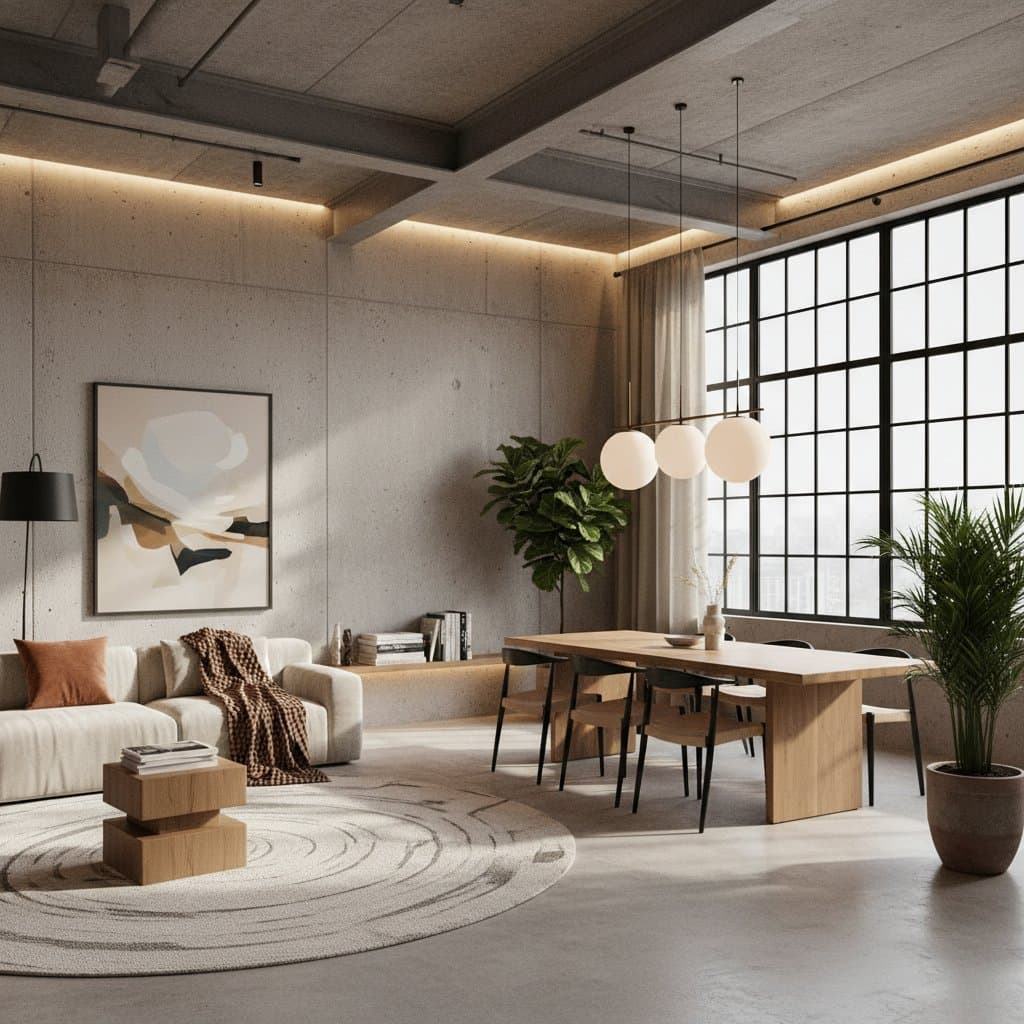
Integrating Warm Minimalist Elements into Industrial Interiors
Industrial design captures the essence of urban grit through visible structural components such as exposed ducts, polished concrete floors, and wrought iron details. These features convey strength and simplicity, yet they occasionally evoke a sense of austerity that detracts from daily livability. The solution lies in layering warm minimalist principles, which emphasize restraint while introducing subtle layers of comfort through organic materials and subdued hues.
This fusion preserves the architectural integrity of industrial spaces while fostering an atmosphere of tranquility. Professionals often recommend starting with an assessment of existing elements to identify opportunities for softening without overwhelming the core style. The result is an environment that honors raw honesty yet invites prolonged habitation.
The following sections outline a structured approach, complete with targeted recommendations to guide your transformation process.
Structured Approach: Enhancing Industrial Spaces with Warmth
1. Establish Foundational Material Contrasts
Core industrial materials like raw concrete walls, steel framework, and brick accents form the backbone of the style. Retain these for their visual impact, but introduce complementary elements to temper their severity. For instance, incorporate wide-plank oak flooring in living areas to contrast with concrete subfloors, providing a tactile warmth underfoot.
Rugs serve as versatile mediators; select hand-knotted wool in neutral tones to overlay expansive tile or cement surfaces, instantly elevating coziness in high-traffic zones like entryways. For vertical surfaces, apply limewash finishes in warm taupe or linen shades over brick to diffuse harshness while maintaining breathability and a matte aesthetic.
These adjustments ensure the space retains its industrial authenticity while becoming more approachable for everyday use.
2. Curate a Palette of Subdued, Earthy Tones
Traditional industrial schemes favor cool grays, charcoals, and silvers, which can amplify a room's chill. Shift toward warmth by integrating terracotta reds, muted ochres, and soft beiges drawn from natural landscapes. In a kitchen, for example, pair matte black cabinetry with caramel-hued quartz countertops to ground the palette without introducing visual noise.
Textiles play a pivotal role; opt for linen upholstery in sand colors for sofas or drapery to absorb light and soften reflections from metallic surfaces. Limit accents to one or two earthy shades, such as sage green in throw pillows, to uphold minimalist clarity while enhancing perceived depth.
This color strategy fosters harmony, allowing the industrial framework to recede slightly in favor of inviting ambiance.
3. Optimize Lighting for Ambient Softness
Exposed Edison bulbs and utilitarian pendants define industrial illumination, often casting stark shadows. Preserve this raw quality by selecting fixtures in aged brass or matte black, but refine the output with warm LED filaments at 2700K temperature for a golden hue that mimics candlelight.
Incorporate diffused sources like sculptural floor lamps with rice paper shades to scatter light across textured walls, creating pools of gentleness in reading nooks. For dining areas, suspend a cluster of glass globes over a steel table to blend industrial form with ethereal glow, ensuring even distribution without glare.
Effective lighting not only highlights architectural details but also psychologically warms the entire enclosure.
4. Build Depth Through Varied Textures
Minimalism values sparsity, yet texture adds dimensionality without excess. Counteract smooth metals and stone with plush integrations such as shearling rugs in bedrooms or velvet armchairs in lounges, positioned to invite interaction.
Diversify further with ceramic vases on reclaimed wood consoles or cotton throws draped over leather benches, each element echoing natural imperfections like visible weaves or subtle patinas. In bathrooms, linen hand towels beside concrete vanities introduce softness to utilitarian routines.
These tactile layers encourage sensory engagement, transforming impersonal surfaces into personalized retreats.
5. Incorporate Biophilic Elements for Vitality
Greenery acts as a natural softener, injecting organic movement into static industrial forms. Select resilient varieties such as fiddle-leaf figs for corners or trailing ivy along shelving to frame exposed beams without dominating the vista.
Pot them in terracotta or woven seagrass containers that align with earthy motifs, placing clusters near windows to maximize natural light filtration. In compact urban lofts, vertical gardens on wire grids merge industrial scaffolding with lush vitality, purifying air while visually bridging hard and soft realms.
Such additions infuse life, making rigid structures feel dynamic and nurturing.
Implementation Essentials: Budget, Timeline, and Execution
Achieving this blend requires strategic planning rather than comprehensive overhauls. Begin with low-commitment swaps like swapping hardware or adding accessories to test compatibility before investing in permanents.
On the financial side, foundational tweaks such as painting walls and sourcing secondhand textiles typically range from 200 to 500 dollars, scaling to 2000 dollars for bespoke woodwork or professional installations. Timeframes vary; superficial enhancements like rug placement and bulb changes complete in a single day, whereas flooring updates or custom millwork demand one to four weeks, including sourcing delays.
Most elements suit hands-on enthusiasts, with tools like paint rollers or basic assembly kits sufficing. Engage licensed experts for electrical modifications or load-bearing adjustments to comply with building codes and ensure durability. Local regulations seldom require approvals for cosmetic alterations, though consulting municipal guidelines prevents unforeseen hurdles.
Expert Recommendations for Refined Execution
Maintain discipline in selection by adhering to a core palette of four to six tones, preventing dilution of the minimalist ethos. Employ directional lighting techniques, such as wall sconces angled to skim rough-hewn surfaces, to accentuate depth and intrigue.
Blend eras thoughtfully; position a mid-century teak credenza beside salvaged factory carts for narrative richness that evolves with the space. Prioritize ergonomic enhancements in functional zones, like memory-foam cushions on bar stools or layered bedding in alcoves, to prioritize usability.
Iterate through mockups using digital tools or fabric swatches to visualize cohesion before final placement. This methodical refinement yields interiors that adapt to lifestyle shifts over time.
Cultivating Enduring Harmony in Your Space
The true measure of success in blending industrial rawness with warm minimalism resides in the intuitive ease of the environment. Spaces crafted this way support both contemplation and congregation, evolving as personal expressions of balance. Embrace incremental adjustments to discover the unique rhythm that resonates with your daily rhythms, ensuring lasting satisfaction in every corner.