
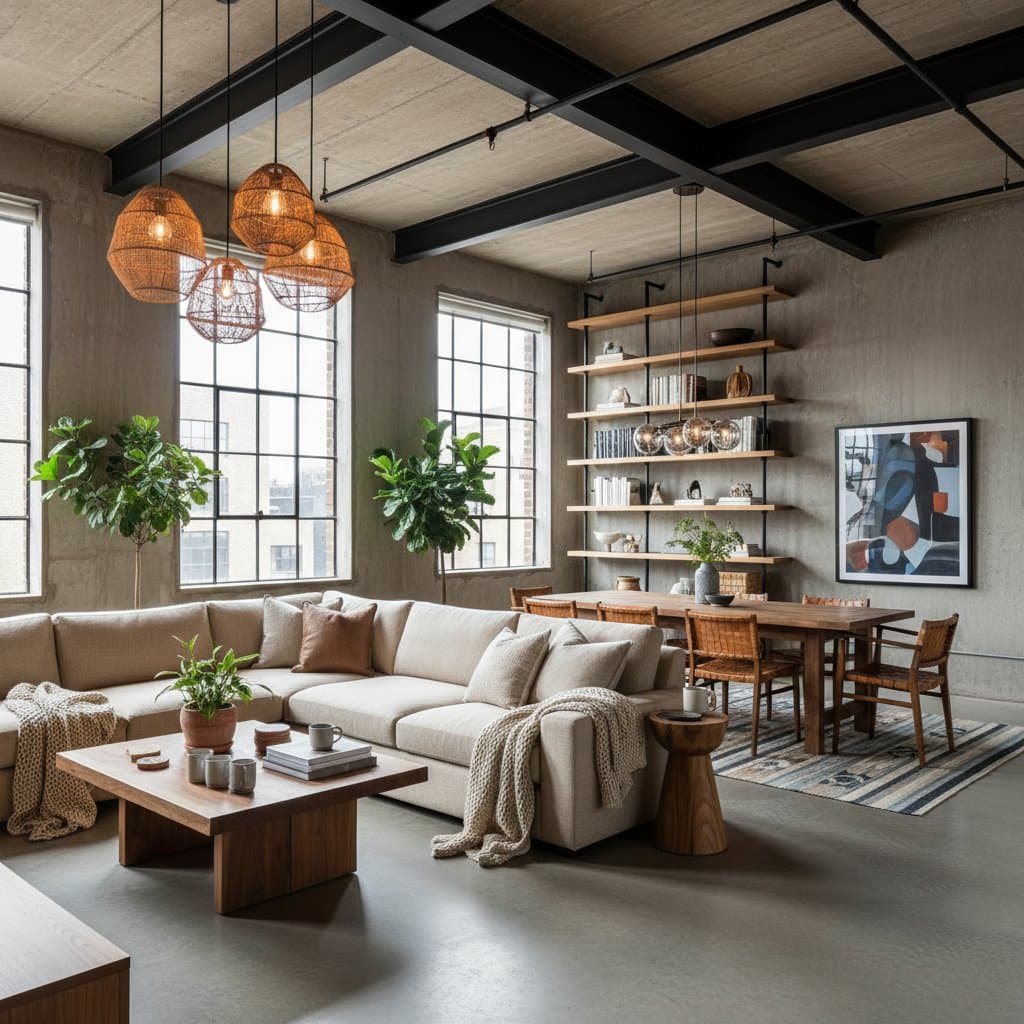
Balancing Raw Elements and Warmth in Modern Industrial Lofts
Industrial lofts offer expansive layouts, high ceilings, and a rugged aesthetic that appeals to many homeowners. However, the exposed brick, concrete floors, and metal beams can create a stark environment that lacks comfort. The solution lies in harmonizing these raw features with elements that introduce softness and personalization, resulting in a space that feels both authentic and welcoming.
This approach honors the building's industrial heritage while enhancing daily livability. Raw materials like pipes and reclaimed wood evoke history, but they benefit from complementary layers of texture and light. The following sections outline specific strategies to achieve this equilibrium, starting with material selections and progressing to layout and maintenance.
Layering Warmth While Preserving Industrial Character
Effective design in an industrial loft relies on contrast to build depth. Rather than concealing structural elements, integrate softer materials and furnishings that complement them. This creates a cohesive narrative where the loft's origins enhance rather than dominate the atmosphere.
1. Incorporate Natural Materials for Texture
Natural elements counteract the hardness of concrete and steel. Reclaimed wood, with its weathered patina, aligns seamlessly with the loft's narrative. Consider these applications:
- Install wide-plank reclaimed oak flooring to add subtle grain and warmth underfoot.
- Build floating shelves from barn wood to display items without overwhelming walls.
- Select a solid walnut dining table that echoes the space's scale while providing a tactile surface.
Fabrics such as full-grain leather for upholstery, breathable linen for drapery, and woven wool for rugs introduce organic softness. For instance, place a low-profile leather armchair near a window to draw the eye toward natural light, softening the room's edges.
2. Apply Color with Intention
Neutral palettes of grays, blacks, and earth tones form the base of industrial design. Introduce warmth through muted accents like terracotta, warm beige, or deep forest green. These colors enhance raw surfaces without introducing visual clutter.
Incorporate them via:
- A single accent wall painted in soft rust to highlight exposed brick.
- Throw pillows and rugs in camel hues to add subtle layering.
- Framed prints featuring organic motifs in olive tones for wall interest.
Opt for matte paints and finishes to maintain a grounded feel. These choices scatter light evenly, reducing harsh reflections on metallic elements.
3. Master Lighting for Depth and Ambiance
Lighting transforms the mood of an industrial loft, especially given the dramatic shadows cast by high ceilings. Natural daylight from oversized windows provides a starting point, but layered artificial sources ensure versatility throughout the day.
Organize lighting into categories:
- Ambient options: Install recessed LED tracks along beams for even overhead illumination.
- Task-focused setups: Hang adjustable pendant lamps over kitchen counters or desks to support functionality.
- Accent highlights: Position LED strips behind shelving or along baseboards to emphasize textures like brick or wood.
Select bulbs with a color temperature of 2700K to 3000K for a cozy, incandescent-like glow. Dimmers allow adjustment from bright task lighting to intimate evening settings, preventing the space from feeling cavernous.
Budget and Implementation Planning
Achieving balance requires thoughtful investment, but changes can occur incrementally. Focus on high-impact updates first, such as lighting and textiles, before tackling structural elements.
Estimated costs for common projects:
- Wood floor refinishing: $3 to $8 per square foot, including sanding and sealing.
- Reclaimed wood paneling on feature walls: $10 to $20 per square foot, materials and installation.
- Full lighting overhaul with fixtures and wiring: $500 to $2,000 for a 1,000-square-foot loft.
- Bespoke shelving units: $1,500 to $5,000, varying by wood type and complexity.
For surface treatments like sealing concrete, consult professionals to avoid issues such as moisture retention. Electrical modifications demand a licensed electrician due to the intricate wiring in converted warehouses, ensuring compliance with safety standards.
Timelines depend on scope: Quick updates like adding rugs and lamps take one to two weeks, while floor or cabinetry work may span two to three months. Phase projects to minimize disruption, perhaps starting with living areas.
Adding Personal Elements for Livability
The vastness of industrial lofts can evoke impersonality. Infuse character through curated details that reflect individual style and connect to the space's context.
Strategies for personalization:
-
Curate artwork from local artists depicting urban evolution to tie into the building's history.
-
Position fiddle-leaf fig plants in corners to introduce greenery and purify air.
-
Integrate vintage industrial finds, such as a restored factory cart as a coffee table, for narrative depth.
-
Arrange open shelving with layered books, pottery, and woven baskets to inject color and warmth.
These additions foster a sense of ownership, turning the loft into a personalized sanctuary.
Sustaining the Design Equilibrium
Preserve the refined balance through routine care. Exposed surfaces accumulate dust rapidly, so employ a soft-bristle vacuum for brick and a microfiber cloth for metal. Reseal concrete every three to five years with a penetrating silane product to protect against wear while retaining its matte appearance.
Monitor fabric elements for fading; rotate textiles seasonally to extend their life. Annual inspections of lighting fixtures prevent bulb burnout and maintain even illumination.
Creating an Authentic and Inviting Loft Environment
Harmonizing industrial rawness with inviting warmth yields a loft that celebrates its origins while prioritizing comfort. Natural materials ground the space, strategic lighting sculpts ambiance, and personal touches ensure emotional connection. This thoughtful integration delivers a residence that is stylish, functional, and distinctly yours.