
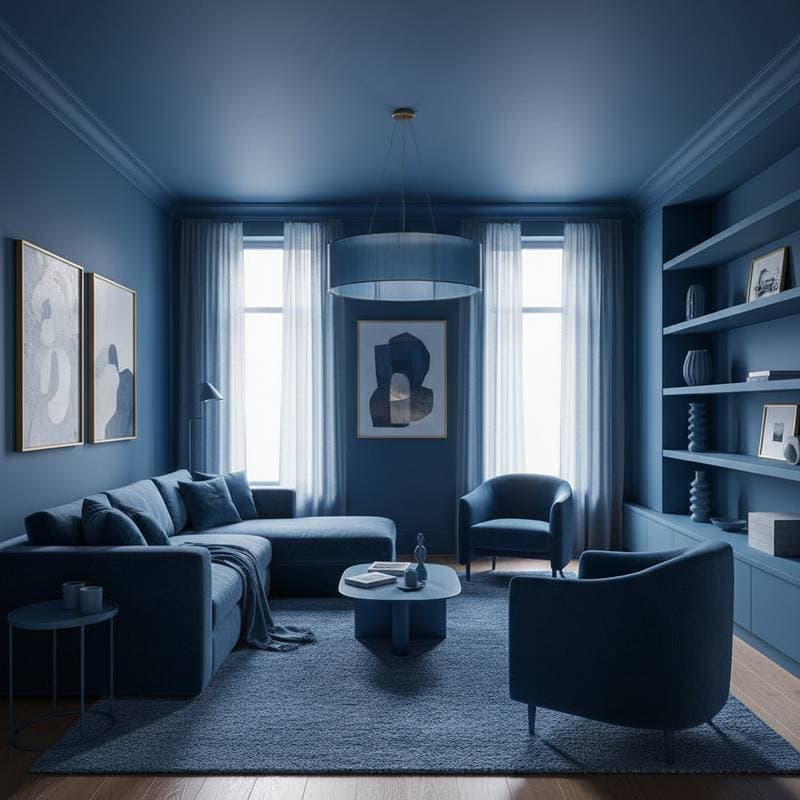
Single-Color Homes Gain Popularity: Bold Design Inspiration
Picture entering a living room enveloped in a uniform deep green hue across walls, furniture, and ceiling. This immersive quality resembles stepping into an artwork. The single-color, or color-drenched, trend now captivates social media and design communities as homeowners shift from neutral schemes to saturated, unified palettes.
Traditional advice favored subtle colors with accents. Current preferences embrace one dominant hue for cohesion, drama, and calm. Proper planning, layering, and implementation unlock this potential.
This guide explains the principles of single-color interiors, shade selection, and key considerations before applying a bold hue throughout a room.
Principles of the Monochromatic Approach
A monochromatic design employs variations within a single color family. Lighter tints, darker shades, and diverse textures maintain interest. Consider a navy blue room featuring matte walls, velvet sofas, and glossy lamps, all in blue tones. These elements sustain visual harmony.
Experts term this method color drenching, which extends paint to ceilings, trim, doors, and occasionally furniture. The result delivers an intentional, contemporary immersion.
Execution demands precision. An ill-suited shade or finish risks a flat or oppressive atmosphere. Thoughtful integration of tone, texture, and light fosters depth and ease.
Steps to Implement Monochromatic Design
Effective single-color spaces extend beyond paint to encompass surfaces, materials, and textures tied to the core hue. Follow these steps for a structured project.
1. Test in a Designated Area
Select a prominent wall section and apply the paint. Evaluate its appearance under natural daylight, evening lamps, and overhead fixtures. This reveals shifts in perception across conditions.
2. Select Complementary Finishes
Apply uniform finishes to walls and trim for seamlessness. Matte options soften edges, while semi-gloss varieties amplify light and accent details like crown molding.
3. Incorporate Textural Layers
Vary the scheme through fabrics and surfaces instead of hues. Pair linen drapes with polished wood tables or sisal rugs over painted floors. Such contrasts add vitality without disruption.
4. Extend Color to the Ceiling
Match ceiling paint to walls to eliminate horizontal lines. This technique expands perceived height and unifies the enclosure, essential for full drenching.
5. Integrate Purposeful Lighting
Lighting defines monochromatic success. Blend recessed ceiling lights for general illumination, desk lamps for focused tasks, and wall sconces for highlights. These prevent uniform shadows that mute vibrancy.
6. Introduce Subtle Shade Variations
Incorporate off-tones via upholstery, rugs, or framed prints. A mid-blue room might feature pale blue pillows against deeper walls. This strategy ensures equilibrium and wards off repetition.
Environmental and Regional Considerations
Color perception varies by locale and illumination. Sunny regions enhance dark shades, rendering them vibrant and layered. Dimmer climates suit lighter tones to preserve brightness.
Humidity influences longevity. In moist zones like bathrooms, select mold-resistant, scrubable paints. Arid areas require formulas that withstand expansion and color retention. Tailor choices to local weather for durability.
Achieving Balance Between Intensity and Livability
Full commitment to one color intimidates many. Balance arises from pairing bold saturation with organic materials such as oak shelving, marble counters, or jute accents. These temper vibrancy.
For subtle bases, elevate with sheen paints or brass hardware. Begin in compact zones like guest baths or hallways to build confidence. These trials minimize risk in primary areas.
Expert Recommendations for Optimal Results
- Prioritize paints with elevated pigment levels for superior opacity and depth.
- Employ premium angled brushes for edges and microfiber rollers for even coverage.
- Cut in borders manually before rolling to achieve flawless transitions.
- Layer coordinating textiles or subtle patterns in the hue family for added intrigue.
- Position mirrors opposite windows to distribute light and amplify spatial nuance.
Sustaining Your Monochromatic Interior
Completed spaces demand routine care. Matching tones simplify spot repairs; store excess paint in sealed containers. Wipe surfaces with a gentle detergent solution, focusing on high-touch zones like doorknobs.
Regular dusting preserves texture clarity. Annual inspections catch wear early, ensuring the design endures. This approach maintains the serene, unified aesthetic over time.
Transform Your Space with Confidence
Embracing single-color design yields tranquil, standout environments. Through deliberate shade choices and textural play, any room achieves sophisticated harmony. Start small, observe effects, and expand to craft personalized retreats that inspire daily.