
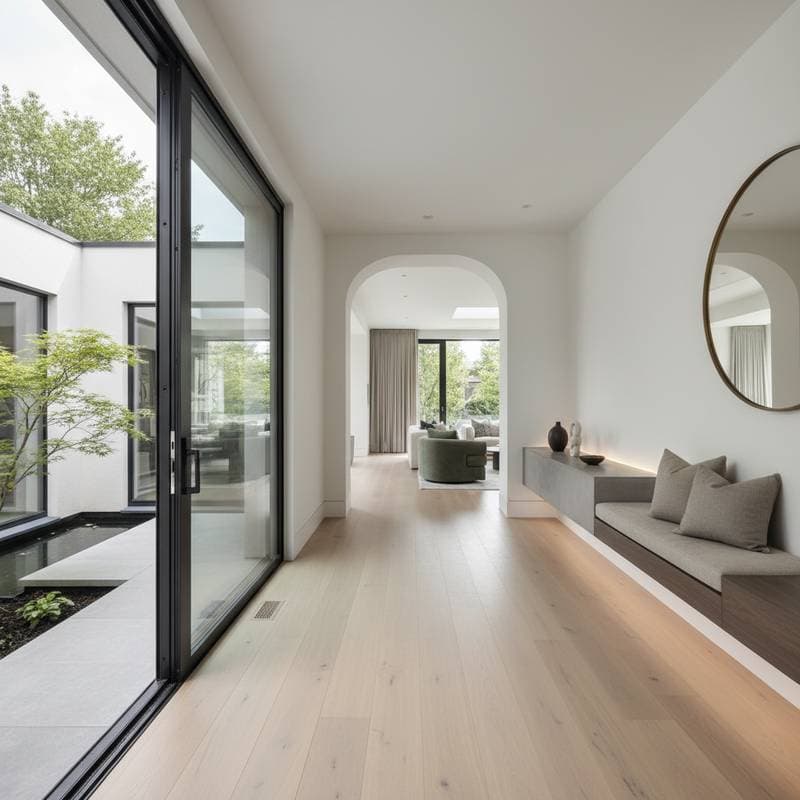
Transitional Spaces That Redefine Home Architecture
As you enter through the front door, observe the gradual shift in light and air quality. This transition happens within a liminal space, a term architects use for areas like hallways, sunrooms, or covered patios. These zones straddle the boundaries of indoors and outdoors, private and public domains. Despite their subtle presence, they profoundly influence the overall feel and efficiency of a home.
Understanding Transitional Spaces
Transitional spaces serve as connectors between distinct areas in a residence. They vary from compact mudrooms to expansive courtyards. The core purpose involves facilitating a seamless passage between environments. When executed effectively, these spaces foster fluidity of movement, physical ease, and a sense of serenity. They also manage elements such as natural illumination, thermal conditions, and levels of privacy.
People frequently traverse these areas without much reflection, yet they occupy considerable time in daily routines. A meticulously planned transitional space expands the home's perceived dimensions, streamlines organization, and cultivates an hospitable environment.
Why They Matter
Transitional spaces extend beyond mere pathways. They shape the everyday experience of inhabiting a home. Consider these primary advantages:
- Improved flow: These areas direct movement intuitively, minimizing disarray and navigational challenges. For example, a well-placed entry vestibule prevents congestion at main doorways.
- Better light and air: Semi-enclosed designs permit abundant daylight and ventilation, reducing reliance on artificial sources. This enhances energy efficiency and mood.
- Flexible use: Adapt them for multiple purposes, such as a quiet reading corner, a plant-filled entry, or an informal seating zone.
- Emotional comfort: They offer brief pauses between tasks or settings, promoting relaxation and mental transitions.
Such features infuse practicality and personality into living areas. Every square foot gains purpose, and the home achieves greater cohesion.
Ways to Create Transitional Spaces
Incorporate transitional elements through diverse approaches, tailored to existing layouts and financial constraints. The following options provide viable starting points:
-
Entryways and Mudrooms
Install custom storage solutions, including benches with integrated cubbies and wall-mounted hooks for outerwear and accessories. Opt for weather-resistant materials like sealed hardwood or vinyl composites to maintain tidiness throughout the home. This setup offers a defined welcome point for visitors and family alike. -
Covered Porches or Patios
Employ partial enclosures with retractable screens, lattice panels, or wooden pergolas to form sheltered extensions. These structures bridge living rooms to gardens, with costs ranging from $500 for basic screening to $5,000 for custom builds using cedar or aluminum. -
Glass Doors and Room Dividers
Select sliding or bi-fold glass systems to unite interior rooms with exterior views while preserving energy efficiency through double glazing. Though initial investments may exceed $2,000, they deliver enduring aesthetic and functional returns. -
Hallways with Purpose
Transform narrow corridors by integrating recessed shelving for books or displays, paired with adjustable LED track lighting. Choose neutral palettes and textured wall finishes to imbue the space with character and utility. -
Interior Courtyards or Atriums
During renovations, integrate a central planted atrium with skylights to channel sunlight into core areas. Use potted evergreens or vertical gardens for low-maintenance greenery that serves as a serene centerpiece.
Practical Factors to Consider
Evaluate daily circulation patterns when developing a transitional space. Reflect on desired sensations during shifts between zones. Key considerations include:
- Budget: Modest enhancements, such as installing ambient lighting or modular shelving, typically fall under $300. Extensive projects like enclosed sunrooms may approach $10,000, factoring in labor and materials.
- Maintenance: Select durable options like porcelain tiles, weatherproofed timber, or powder-coated metals that withstand moisture and wear. Routine care involves simple wiping and seasonal inspections.
- Permits: Structural modifications involving new enclosures, roofing, or electrical work require compliance with local building codes. Consult municipal offices early to avoid delays.
- Timeframe: Weekend projects suit cosmetic tweaks, whereas comprehensive alterations demand two to six weeks, depending on contractor availability and scope.
Addressing these elements upfront prevents complications and ensures long-term satisfaction.
Implementing Transitional Design
Full-scale overhauls prove unnecessary to reap the rewards of transitional elements. Initiate with accessible changes: position a cushioned bench adjacent to the entrance, substitute opaque doors with transparent alternatives, or line pathways with potted foliage. Each adjustment strengthens spatial links and refines navigation.
Once attuned to these boundaries, their role in elevating comfort becomes evident. Transitional spaces function as essential links, rendering a home equilibrated, expansive, and authentically inhabited. Intentional focus on these interstitial areas infuses vitality and intentionality across the entire residence.