
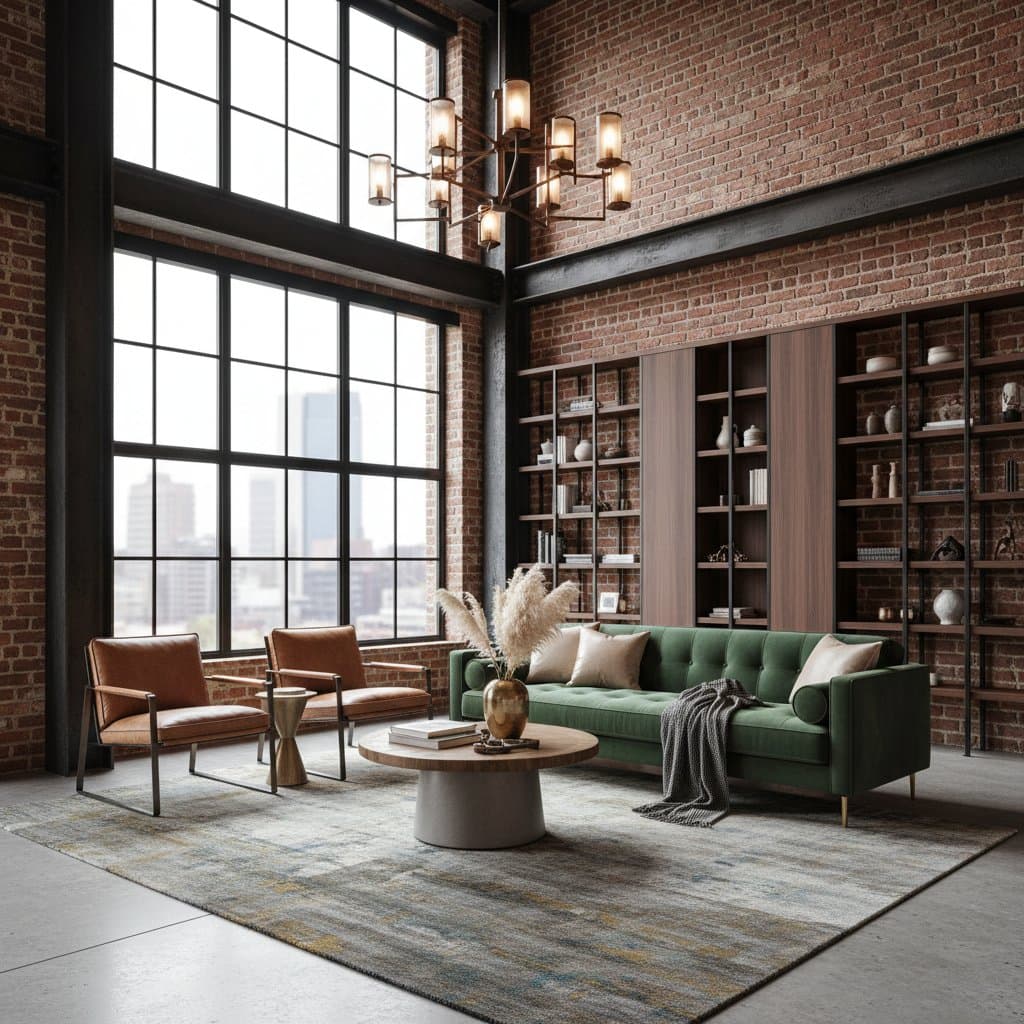
Blending Industrial Rawness with Luxurious Opulence in Interior Design
Individuals often appreciate the appeal of exposed brick and steel yet remain reluctant to forgo the warmth of polished surfaces. Some find inspiration in the ruggedness of a converted warehouse alongside the refinement of a boutique hotel. The advantage lies in the possibility of incorporating both. Combining raw industrial components with opulent details produces an environment that appears balanced, stylish, and uniquely personal.
Industrial-luxury design involves pairing coarse textures with elegant particulars. This method allows enjoyment of the durability and authenticity of unrefined materials while introducing softness, luster, and ease. Whether beginning anew or refreshing a single area, such integration elevates the surroundings to a level that conveys stability and polish.
Grasping the Essence of the Style
Industrial design emerged from utilitarian environments such as factories and workshops. It honors visible steel, brick, concrete, and straightforward configurations. Luxury design prioritizes ease, artistry, and premium substances. Merging these yields a aesthetic that combines genuineness with indulgence.
Balance serves as the cornerstone. Excessive metal and concrete may evoke chilliness. An overabundance of sumptuous fabrics or elaborate ornaments might dilute the industrial sharpness. The objective involves a deliberate fusion that emphasizes disparity without generating discord.
Consider these typical characteristics of each approach:
Industrial attributes:
- Visible beams, ductwork, or piping
- Coarse brick or concrete surfaces
- Steel-framed openings and portals
- Salvaged timber or weathered coatings
- Practical, expansive arrangements
Luxury components:
- Buffed marble, brass, or glass planes
- Plush fabrics including velvet, silk, or hide
- Inviting illumination and prominent fittings
- Bespoke storage and customized seating
- Intentional stacking of artwork and ornaments
When these aspects converge, the outcome projects contemporaneity alongside enduring quality. Contrast delivers drama, while refinement ensures livability.
Establishing a Solid Base
Prior to selecting coatings or furnishings, examine the framework of the area closely. Industrial-luxury design thrives when the built environment accommodates both unpolished and sophisticated features. Expansive windows, lofty ceilings, and fluid floor plans prove optimal, though compact areas can succeed through astute decisions.
- Reveal or accentuate existing elements. Should brick walls, steel supports, or concrete bases exist, integrate them rather than conceal.
- Preserve openness in arrangement. Industrial settings facilitate motion and utility. Steer clear of substantial dividers; employ seating or illumination to delineate regions.
- Allocate resources to robust illumination. Combining industrial-inspired pendants with cozy general lighting fosters dimension and personality.
In cases where inherent industrial traits absent, introduce the aesthetic via simulated coatings and substances that emulate the motif.
Selecting Materials to Harmonize Roughness and Elegance
Choices in materials form the core of this strategy. Appropriate pairings of surfaces foster unity instead of disorder.
Metals and Coatings
Initiate with steel, iron, or subdued black fittings to anchor the setting. Introduce opposition via brass, bronze, or lustrous chrome. Such variety in sheens provides profundity while upholding industrial credibility.
- Industrial foundation: Ebony steel outlines, unprocessed iron racks, satin nickel fittings
- Opulent overlay: Brass spigots, gilded framed reflectors, buffed metallic highlights
Maintain uniformity within categories. For instance, apply ebony steel to framework and brass to adornments.
Timber and Lithic Elements
Salvaged or rugged-hewn timber complements sleek, upscale lithic materials. This pairing averts excessive austerity or excessiveness.
- Employ reclaimed oak planking alongside marble worktops.
- Unite natural-edged timber surfaces with varnished enclosures.
- Incorporate lithic mosaics adjacent to steel racks for tactile and thermal interest.
Fabrics and Padding
Yielding substances impart solace and grandeur to an industrial framework. Opt for textiles that exude richness yet remain serviceable.
- Velvet settees in subdued shades such as charcoal or emerald
- Hide loungers featuring evident seams
- Linen drapes that diffuse illumination softly
- Woolen mats superimposed upon concrete or timber bases
Select hues in neutral or terrestrial palettes to sustain the industrial essence. Introduce select gem-like tones or metallic filaments for subtle grandeur.
Harmonizing Palette and Illumination
Hue significantly influences the amalgamation of these aesthetics. Industrial realms frequently employ grays, browns, blacks, and whites. Opulent settings favor profound shades and mirroring planes. The aim involves blending without sacrificing accord.
- Commence with neutral groundwork. Apply warm grays, gentle whites, or taupe to verticals and major expanses.
- Incorporate profundity via opposition. Ebony steel borders or shadowed timber girders secure the composition.
- Deploy luster judiciously. Metallic coatings, glazed divisions, or shiny tesserae contribute radiance.
- Leverage illumination strategically. Industrial droplights, crystal suspensions, and flank emitters generate stratified beams that illuminate both coarse and sleek aspects.
Cozy beams temper unrefined substances, whereas focused rays emphasize opulent specifics like visuals or prominent seating.
Structuring the Arrangement
The configuration ought to convey openness and utility, featuring distinct sectors that transition fluidly. Industrial principles stress functionality, while luxury enhances ease and optical cadence.
Effective arrangement strategies include:
- Sustain unobstructed vistas. Refrain from obstructing panoramas with lofty pieces.
- Deploy zone mats to outline lounging or feasting areas absent barriers.
- Equilibrate proportions. Associate sizable industrial objects with commensurate opulent selections, such as a steel-bordered low table near a velvet lounge.
- Interweave tactile qualities per sector. For example, merge a concrete culinary centerpiece with hide perches and brass droplights.
This methodology renders each vicinity purposeful rather than incongruent.
Budget, Duration, and Labor Factors
Integrating industrial rawness with opulent facets accommodates diverse fiscal scopes, yet meticulous planning proves essential. Expenses hinge on the extent of foundational alterations or tailored elaborations.
- Modest to intermediate allocation: Utilize simulated veneers like brick facades, synthetic stone-patterned counters, or ready-made metallic fittings. Anticipate greater personal labor yet reduced substance outlays.
- Central allocation: Blend authentic substances with select focal items. Consider authentic brick on a singular accent plane paired with buffed brass emitters.
- Premium allocation: Commit to tailored steel casements, marble planes, and bespoke emitters. Outcomes impress profoundly but necessitate expert fitting and extended periods.
Account for interruptions during renovations. Unveiling brick or concrete generates particulate matter. Buffing lithics or affixing custom metallurgy demands duration and accuracy. Engage certified specialists for foundational or wiring tasks.
Advantages and Drawbacks of the Industrial-Luxury Fusion
Prior to dedication, evaluate benefits against potential pitfalls.
Advantages:
- Yields an enduring aesthetic seldom prone to obsolescence
- Adapts to domestic and mercantile contexts
- Provides versatility in substances and veneers
- Stimulates ingenuity and individualization
Drawbacks:
- Risks imbalance absent careful material coupling
- Certain industrial planes demand sealing or upkeep
- Opulent veneers potentially escalate expenditures
- Attaining optimal thermal quality in beams may involve experimentation
Recognizing these aspects facilitates astute preparation and mitigates dissatisfaction.
Assembling the Complete Aesthetic
With groundwork and substances established, infuse vitality. This phase animates the design.
- Superimpose ornaments. Integrate select opulent items, including graphic panels, formative emitters, or metallic salvers. Eschew excess.
- Incorporate focal emitters. Substantial suspensions or striking droplights impart theatrics and equilibrium.
- Blend eras. Associate antique industrial artifacts with contemporary pieces.
- Introduce foliage. Verdure tempers rigid contours and infuses vitality.
- Preserve crisp contours. Restraint permits substances to articulate.
Refinements occur progressively. The allure resides in adaptability to evolving preferences.
Sustaining the Design
Upon completion, consistent tending preserves peak condition. Industrial substances mature elegantly, though opulent planes require vigilance.
- Apply sealant to concrete and lithics periodically to avert blemishes.
- Nourish hide and cleanse velvet using appropriate agents.
- Buff metallic highlights to forestall dulling.
- Examine emitter assemblies and substitute illuminants with thermal variants to uphold mood.
Viewing upkeep as integral ensures enduring modernity and hospitality.
Realizing Balanced Interiors
Uniting industrial rawness with opulent splendor avoids polarities. It centers on equilibrium between resilience and tenderness, utility and solace.
Applicable to urban lofts or rural dwellings, this method liberates expression of dual facets. It honors industrial heritage while embracing luxury's ease. Proceed deliberately, select resonant substances, and allow disparity to direct.