
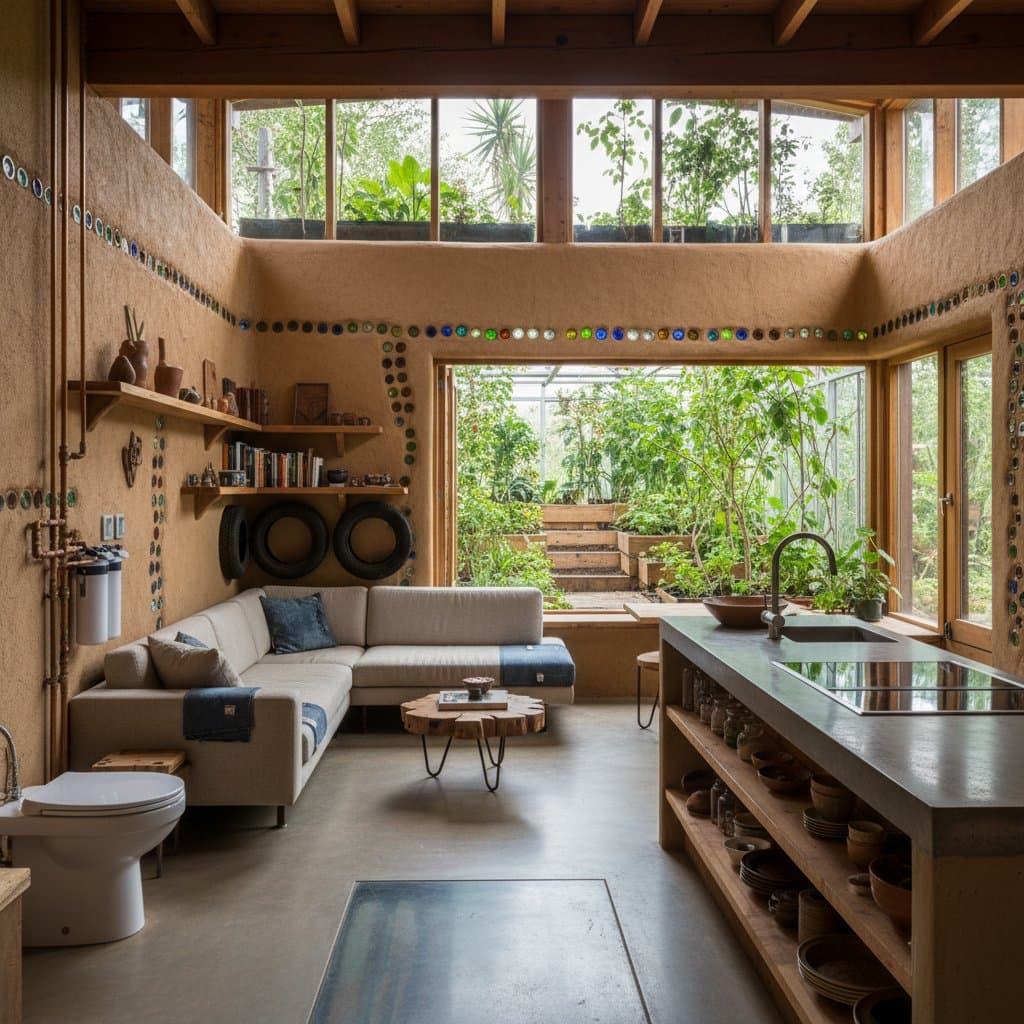
Earthships: Radical Off-Grid Homes from Recycled Materials
Picture entering a residence that maintains ideal temperatures throughout the year without relying on conventional heating or cooling systems. Walls consist of rammed earth within discarded tires, roofs capture precipitation for use, and solar energy drives all household functions from illumination to refrigeration. This reality forms the core of an Earthship, a highly autonomous dwelling model.
Homeowners increasingly question traditional living arrangements and their associated maintenance expenses. Escalating energy costs, erratic climate patterns, and heightened ecological consciousness drive the search for innovative alternatives. Earthships provide a comprehensive off-grid solution, integrating reclaimed materials, renewable resources, and biomimetic design into a cohesive living space.
Defining an Earthship
An Earthship qualifies as an off-grid dwelling constructed mainly from repurposed and organic elements. Architect Michael Reynolds originated the concept to develop structures capable of self-maintenance without municipal services. Key components include tires, glass bottles, aluminum cans, and rammed earth, which combine to create robust, thermally efficient walls that naturally moderate internal climates.
The underlying objective remains straightforward: erect a building that generates its energy, gathers its water, and processes its waste. Beyond mere shelter, an Earthship functions as a compact biosphere engineered for autonomy and resource optimization.
Core Operational Principles
An Earthship functions through six fundamental principles that render it almost entirely self-reliant. Each principle tackles a primary dependency that standard residences fulfill via external infrastructure.
-
Passive Solar and Thermal Regulation
Thick walls formed from earth-rammed tires capture solar warmth by day and radiate it gradually overnight. In the Northern Hemisphere, expansive south-oriented glazing admits sunlight for winter heating. During warmer seasons, strategic overhangs and airflow pathways mitigate excess heat buildup. -
Renewable Electricity Generation
Photovoltaic arrays, supplemented occasionally by compact wind generators, supply electrical needs. Deep-cycle batteries retain surplus energy for evening and cloudy periods. Well-configured setups support everyday appliances, lighting, and minor power tools. -
Rainwater Collection and Management
Sloped roofs channel precipitation into filtration systems and subterranean cisterns holding thousands of gallons. Treated water serves potable, hygiene, and landscaping purposes. In arid zones, expanded reservoirs or auxiliary groundwater sources enhance reliability. -
On-Site Wastewater Processing
Interior planters and exterior reed beds handle effluent naturally. Greywater from lavatories and baths percolates through vegetation, yielding reusable fluid for lavatory cycles and subsurface irrigation. Blackwater undergoes anaerobic digestion in sealed chambers followed by microbial purification. -
Integrated Food Cultivation
Enclosed solariums enable year-round production of greens, root crops, and dwarf fruit varieties. These zones also dehumidify air and enhance ventilation, contributing to overall indoor vitality. -
Sustainable Material Utilization
Incorporating waste items like tires, containers, and metal reduces landfill contributions while yielding resilient, non-combustible barriers. The earthen cores deliver substantial thermal inertia for climate stability.
Step-by-Step Construction Overview
Erecting an Earthship demands meticulous preparation and persistence, though feasibility exists for dedicated builders. The endeavor blends standard building techniques with handling of non-traditional components.
-
Site Evaluation and Alignment
Select terrain offering optimal solar access, firm ground, and logistical ease for deliveries. Precise alignment proves essential, as passive solar performance hinges on directional exposure. Typically, facades orient southward to optimize winter solar intake while shading summer rays. -
Base and Primary Walls
Foundations employ rammed earth berms or reinforced concrete pads. Laborers compact moist soil into salvaged tires, forging each into a 200-pound adobe-like unit. Stacked masonry-style, these form load-bearing enclosures of superior strength and insulation value. -
Structural Framing and Coverage
With perimeter walls secured, timber or metal frameworks support roofing and divisions. Low-pitch roofs integrate scuppers to funnel runoff toward harvesting conduits. -
Completion and Integration
Earthen plasters coat surfaces for aesthetic and protective finishes. Subsequently, install photovoltaic setups, energy storage, conduits, and effluent networks. Culminate with bespoke cabinetry and organic coatings.
Financial Considerations
Earthship expenses fluctuate considerably based on scale and execution. Owner-built compact versions average $225 to $275 per square foot, encompassing sourcing and infrastructure. Contractor-led projects with enhanced features escalate to $375 to $475 per square foot.
Regional factors influence totals, including wage scales, regulatory demands, and scrap access. Abundant free tires lower material outlays, whereas remote sites inflate transport charges. Photovoltaic kits, purification units, and lithium batteries constitute notable investments.
Although entry barriers exceed those of stick-built homes, operational economies prove substantial. Self-produced power, harvested water, and homegrown provisions slash annual expenditures by thousands.
Navigating Regulations
Off-grid builds like Earthships often encounter regulatory friction, as codes lag behind innovative methods.
Commence by consulting municipal planners on zoning and approvals. Even autonomous sanitation may necessitate percolation tests or variance petitions. Rural jurisdictions typically offer leniency, while metropolitan zones enforce rigorous standards for footings, wiring, and fixtures.
Engage specialists versed in sustainable methods to draft compliant blueprints. Submit evidence of structural integrity, fire resistance, and sanitation efficacy to expedite clearances.
Owner-Built Versus Expert Construction
Experienced individuals can assemble an Earthship independently, yet novices face steep learning curves. Demands encompass stamina for ramming, skill in finishing, and knowledge of integrations.
Self-Directed Build:
- Minimizes expenses through personal effort.
- Affords complete customization.
- Demands extended timelines and robustness.
Hired Expertise:
- Accelerates timelines with assured proficiency.
- Elevates costs yet curtails errors and revisions.
- Simplifies code adherence via certified documentation.
Prospective builders often commence with seminars or pilot structures, such as atria or outbuildings, to master processes suited to local conditions.
Construction Safety and Upkeep
Vigilance during assembly prevents hazards. Stabilize tire stacks with temporary shores, and don respirators when abrading glass or metal. Delegate electrical and hydraulic work to certified technicians for code conformity and reliability.
Post-completion, maintenance remains minimal compared to grid-tied properties. Passive elements endure with little intervention. Routinely dust photovoltaics, monitor battery health, refresh filters, and mend plaster as needed.
Cultivated areas require seasonal tending for vitality. Annually scrutinize collection channels and storage for integrity.
Advantages and Compromises
Key Gains:
- Near-elimination of utility payments.
- Diminished carbon emissions.
- Consistent thermal environments.
- Fortified against disruptions in supply chains.
Notable Drawbacks:
- Elevated startup investments and exertion.
- Bureaucratic obstacles in regulated locales.
- Niche appeal affecting marketability.
- Dedication to eco-practices essential.
Owners frequently deem the autonomy and harmony with surroundings justification enough.
Adapting to Local Environments
Earthships excel in sun-rich, precipitation-moderate settings. Arid highlands benefit from thermal buffering against diurnal extremes. Humid tropics or overcast latitudes may incorporate mechanical aids for airflow or generation.
Proximity to recycling hubs eases material procurement. Subarctic zones demand supplementary sheathing and low-emissivity panes for efficacy.
Enduring Worth
Market liquidity for atypical residences varies, though eco-advocates prize Earthships for longevity and frugality. Insurers and financiers may require appraisals from sympathetic providers. Green financing initiatives often accommodate such ventures, yielding fiscal liberation via negligible recurring costs.
Steps to Realize Your Earthship
Embark conservatively by touring installations, attending instructionals, or assisting builds. Such immersion reveals practicalities and refinements.
Formulate a detailed fiscal plan with buffers for variables. Engage officials promptly to map compliance paths. Rally collaborators: off-grid designers for schematics and earth-build specialists for execution.
Embracing Earthship life transcends thrift; it redefines habitation in synergy with ecosystems. Through deliberate strategy, endurance, and artistry, construct a domicile of inherent vitality and exemplary sustainability.