
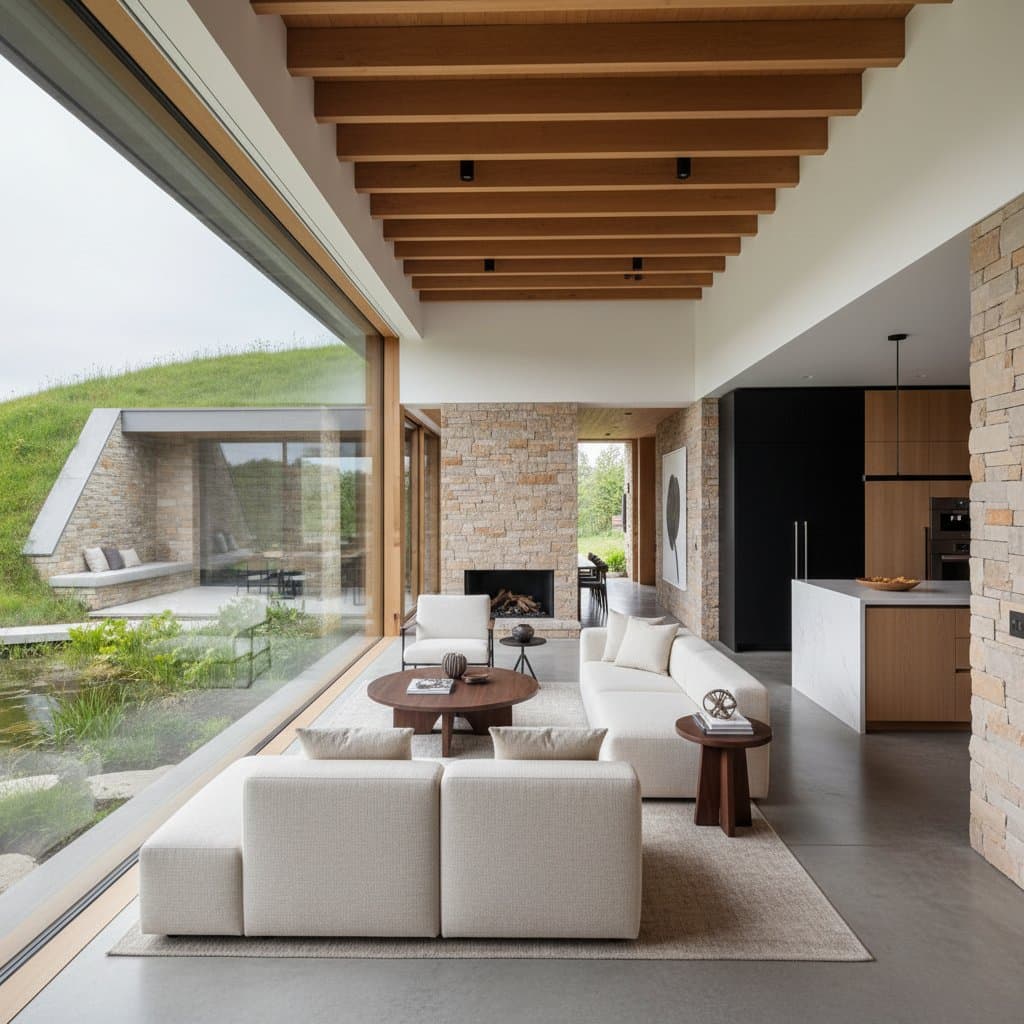
Earth-Sheltered Homes Elevate Underground Living
Consider a residence that serves as a secluded haven, remaining cool during intense summer heat and warm amid winter cold. Envision entering an environment where walls evoke serenity, temperatures remain stable, and the architecture integrates profoundly with the natural world. Such a vision materializes in earth-sheltered homes.
These dwellings incorporate into the terrain, employing the soil as both insulation and shield. Previously viewed as rudimentary or innovative experiments, underground residences now represent opulence, architectural advancement, and ecological balance.
The Rising Attraction of Subterranean Residences
Earth-sheltered architecture appeals through its integration of ease and ecological responsibility. Residents enjoy the profound quietude enveloped by nature while retaining contemporary conveniences. The encircling earth functions as a thermal regulator, sustaining uniform indoor climates. Consequently, energy expenses decrease, drafts diminish, and the ambiance feels stable and soothing.
This approach extends beyond utility to offer emotional fulfillment. The soil dampens external sounds, fostering a sheltered tranquility sought by numerous owners. When combined with deliberate planning and refined detailing, these spaces evolve into opulent refuges rather than mere enclosures.
Types of Earth-Sheltered Homes
Earth-sheltered designs vary according to landscape, weather patterns, and individual preferences. The following outlines primary configurations:
- Bermed Homes: Constructed partly below grade with earth mounded against outer walls. These prove efficient, simpler to erect than total subsurface options, and well-suited to inclined terrains.
- Earth-Covered Roof Homes: Featuring soil and plants over the rooftop, these integrate elegantly into slopes or fields. The outcome resembles a verdant extension of the environment.
- Fully Underground Homes: Positioned completely beneath the surface, these deliver maximum thermal and acoustic isolation. Although demanding precise engineering, they provide exceptional seclusion and steadiness.
Customization aligns each type with specific locations and routines. A bermed structure may complement a countryside setting with expansive vistas, whereas a fully subterranean plan suits city plots emphasizing discretion and auditory control.
Integrating Luxury Elements
Luxury within earth-sheltered homes emphasizes ambiance and artistry over scale or ostentation. Visualize masonry walls aglow under subtle, embedded illumination. Envisage a glazed courtyard channeling sunlight into interior depths, or a ground-source heat system warming floors during cold seasons. Such elements shift subterranean existence from functional to evocative.
Contemporary architects incorporate premium surfacing, striking entrances, and wellness-oriented bath areas. Materials like slate, salvaged timber, and burnished concrete resonate with the external ecology. Expansive glazing and roof openings convert potentially confined areas into vast, illuminated realms. The overall impression resembles a sophisticated sanctuary sculpted from the earth.
Reasons Homeowners Select Earth-Sheltered Designs
For those prioritizing ecological viability, ease, and distinctive aesthetics, earth-sheltered homes fulfill essential criteria. Key motivations include:
- Energy Efficiency: Earth insulation substantially reduces demands for heating and cooling.
- Durability: Shielded from severe climate fluctuations, these structures endure with minimal upkeep.
- Noise Reduction: Surrounding soil attenuates acoustics, yielding serene spaces near thoroughfares.
- Safety: The earth barrier offers inherent defense against tempests and gales.
- Aesthetic Integration: Architecture emerges directly from the site, forging unity between structure and surroundings.
The choice transcends conservation; it involves inhabiting an equilibrated, perpetual, and individualized domain.
Essential Planning Factors
Although compelling, subterranean construction demands meticulous preparation, specialized knowledge, and site-specific adaptations. Consider these aspects:
- Site Assessment: Effective water management proves crucial. Engage a geotechnical specialist to evaluate soil integrity and humidity regulation.
- Waterproofing: Employ robust barriers and runoff mechanisms to prevent infiltration. Prioritize superior components and expert application in this domain.
- Ventilation and Illumination: Utilize air circulation units and positioned apertures or light shafts to uphold freshness and luminosity.
- Regulatory Compliance: Municipal guidelines often specify subterranean protocols. Collaborate with builders versed in these standards.
- Financial Strategy: Expenses fluctuate with intricacy. Basic bermed projects approximate standard builds, whereas elaborate subsurface versions with bespoke elements command premiums.
Despite initial hurdles, enduring efficiencies frequently recoup investments. Moreover, robustness and performance enhance sustained worth.
Enhancing Comfort and Aesthetics
Superior earth-sheltered homes engage the exterior rather than withdrawing from it. Intelligent features introduce illumination, circulation, and elegance. Incorporate these:
- Light Channels and Courtyards: These convey natural glow to remote areas, rendering interiors radiant rather than dim.
- Vegetated Roofs: Plantings of indigenous species bolster insulation and visual appeal. They also mitigate runoff and nurture regional ecology.
- Organic Materials: Select elements mirroring the locale, such as rock, earthen coatings, and untreated lumber, for fluid indoor-outdoor transitions.
- Fluid Plans: Ample arrangements avert enclosure sensations. Merge broad communal zones with intimate retreats for equilibrium.
Options span sleek modernism to pastoral warmth, with earth-sheltered forms accommodating diverse visions.
Selecting Qualified Experts
Erecting a subterranean residence necessitates proficiency surpassing conventional building. Seek architects, engineers, and builders experienced in load dynamics, moisture barriers, and earth-energy installations. Partnership with seasoned teams guarantees secure and aesthetically pleasing outcomes.
To initiate, research credentials through professional associations or referrals. Verify portfolios showcasing similar projects, and request references from past clients. This diligence secures a reliable foundation for your endeavor.
Experiencing Daily Life in the Design
Upon completion, an earth-sheltered home transcends mere construction. It embodies a cadence of solace, seclusion, and environmental linkage. Observe the hushed nights, consistent climates, and how the scenery appears to cascade over the rooftop.
Upkeep remains straightforward. Clear runoff zones, inspect barrier integrity routinely, and tend rooftop flora as needed.
Future enhancements might involve photovoltaic arrays, roof garden expansions, or terraced exteriors blending into the ground. Each augmentation strengthens the dwelling's bond with its context.
Advancing Your Earth-Sheltered Vision
Pursuing an earth-sheltered home marks a decisive move toward resilient opulence. The process crafts not only enclosures but an ecosystem promoting vitality and endurance.
Prepare to embrace a distinctive luxury, rooted in the soil, where each facet embodies the synergy of design and terrain.