
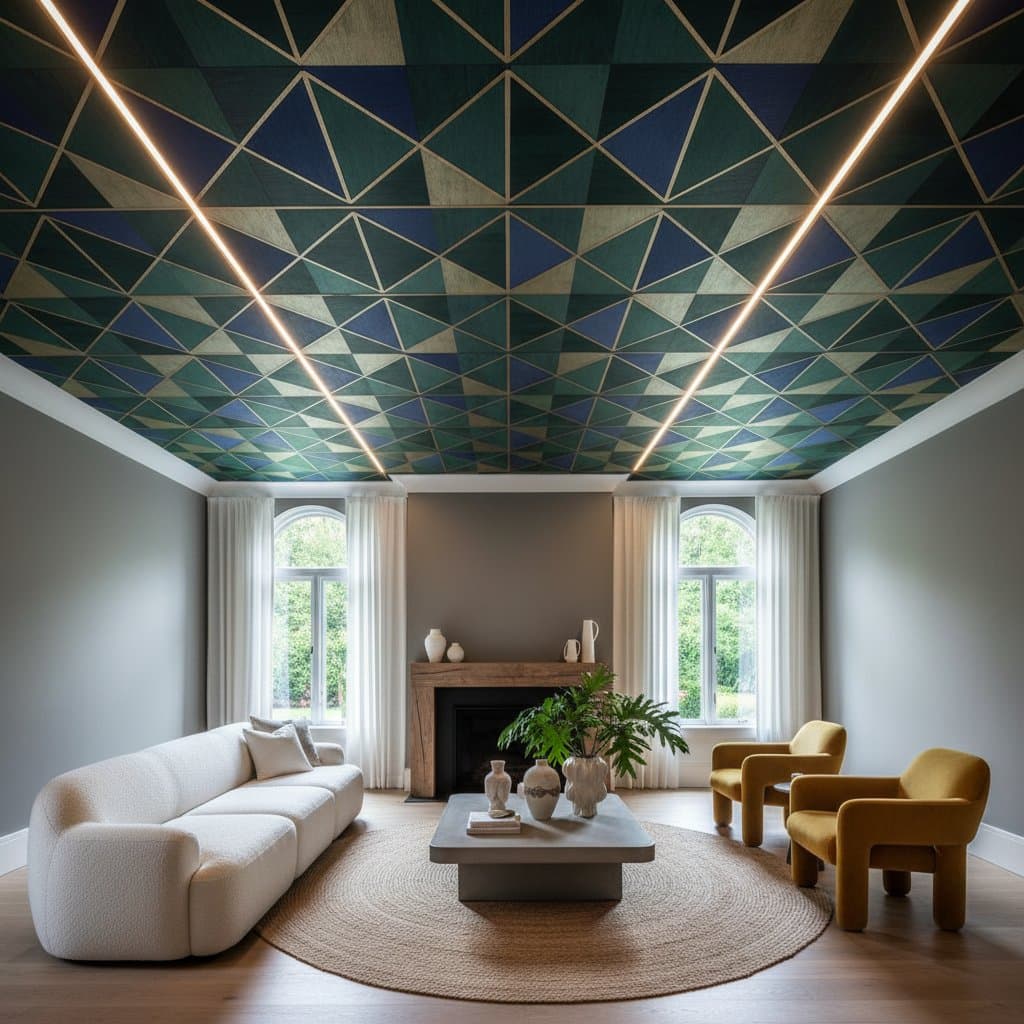
Elevate Ceilings as Key Design Elements
Homeowners frequently invest significant effort in selecting wall colors, flooring options, and furnishings, yet ceilings remain a vast, underutilized canvas. This overhead surface, known as the fifth wall, influences a room's overall perception more than many realize. A well-designed ceiling can expand perceived space, infuse personality, and unify disparate elements.
Consider a room that appears stagnant or confined. Introducing elements like vibrant hues, intricate textures, or strategic illumination on the ceiling can inject vitality and dimension. These transformations suit various budgets and expertise levels, provided one approaches the project methodically.
The following guide outlines essential concepts, design options, preparatory steps, and maintenance strategies to achieve a professional outcome.
The Role of the Fifth Wall in Interior Design
Design professionals designate the ceiling as the fifth wall to emphasize its equal importance alongside floors and vertical surfaces. This perspective encourages integration into the broader aesthetic scheme, fostering balance and visual harmony.
Opt for lighter tones on ceilings in rooms with lower heights to enhance verticality. In expansive areas, deeper shades or elaborate patterns can cultivate intimacy. Textural additions contribute layers that delineate zones within open layouts, while aligning ceiling treatments with wall and floor palettes promotes cohesion.
Design Options for Statement Ceilings
1. Painted Ceilings
A fresh coat of paint offers the simplest entry into ceiling redesign. Beyond basic white, experiment with soft pastels for subtlety or saturated colors for impact.
Advantages:
- Effortless application with basic tools.
- Versatile for matching or contrasting room schemes.
- Budget-friendly way to refresh aesthetics.
Disadvantages:
- Flat finishes may highlight imperfections.
- Dark paints demand multiple coats for even coverage.
Estimated Cost: Latex paint ranges from $0.50 to $2 per square foot, including primer and supplies for DIY projects.
2. Wallpapered or Patterned Ceilings
Extend wallpaper beyond walls to create overhead intrigue. Contemporary peel-and-stick varieties simplify installation, accommodating motifs from delicate florals to geometric boldness.
Advantages:
- Instant infusion of character and pattern.
- Ideal for compact areas such as powder rooms or hallways.
- Bridges color themes across the space.
Disadvantages:
- Overhead work demands endurance and possibly assistance.
- Alignment challenges arise with traditional adhesives.
Estimated Cost: Peel-and-stick options cost $1.50 to $3 per square foot; professional installation for conventional types falls between $6 and $10 per square foot.
3. Wood Beams or Plank Ceilings
Exposed beams or plank installations evoke warmth and craftsmanship, suitable for rustic, modern, or transitional styles.
Advantages:
- Natural acoustics absorption for quieter environments.
- Timeless appeal that ages gracefully.
- Conceals wiring or ductwork effectively.
Disadvantages:
- Weight considerations necessitate structural assessment.
- Higher upfront investment in materials.
Estimated Cost: Reclaimed wood planks average $4 to $8 per square foot; faux beams range from $10 to $20 per linear foot.
4. Metal Tiles or Panels
Metal finishes bring reflective elegance and durability, reminiscent of historic architecture yet adaptable to contemporary settings.
Advantages:
- Superior light diffusion for brighter rooms.
- Simple maintenance with wipe-down cleaning.
- Versatile finishes from matte to polished.
Disadvantages:
- Elevated expense in expansive applications.
- Precision required for cuts around outlets and vents.
Estimated Cost: Tin or aluminum tiles cost $5 to $12 per square foot, varying by style and coating.
5. Textured or Coffered Ceilings
Introduce dimension through molding, plaster details, or coffered grids that mimic architectural grandeur.
**Advantages:**n- Enhances perceived height and intricacy.
- Camouflages minor surface flaws.
- Customizable to fit period or modern tastes.
Disadvantages:
- Labor-intensive installation process.
- Dust accumulation in detailed crevices.
Estimated Cost: DIY texture kits start at $2 per square foot; custom coffering with professional help reaches $15 to $25 per square foot.
6. Painted Murals or Custom Art
Commission or create bespoke artwork for a singular expression, such as celestial motifs or abstract compositions.
Advantages:
- Personalized narrative through visual storytelling.
- Focal point that captivates guests.
- Adaptable to evolving decor themes.
Disadvantages:
- Demands artistic skill or specialist hire.
- Alterations prove challenging without repainting.
Estimated Cost: Basic patterns cost $3 to $6 per square foot; intricate murals range from $10 to $30 per square foot based on detail.
Essential Preparations for Success
Time and Effort Assessment
Simple painting requires one full day, while plank or tile setups span two to three days for average rooms. Factor in drying times and cleanup to set realistic timelines.
Safety Protocols
Secure ladders or platforms prevent accidents; maintain three points of contact at all times. Disconnect electricity prior to any fixture modifications.
Regulatory Compliance
Routine cosmetic updates seldom need permits, but structural additions like beams or integrated lighting may require local approvals. Consult building authorities for guidance.
Professional Assistance
For elevated or complex surfaces, engage certified painters or installers. Request portfolios and detailed quotes to ensure quality workmanship.
Pitfalls to Sidestep
- Disregarding Scale: Dark treatments in petite rooms amplify confinement; test swatches in situ.
- Neglecting Surface Preparation: Clean thoroughly and repair cracks to guarantee adhesion.
- Undervaluing Illumination: Pair designs with adequate lighting to reveal textures fully.
- Excessive Complexity: Prioritize restraint; a single bold element often outperforms multiplicity.
- Subpar Material Choices: Invest in durable products to avoid premature wear.
Sample materials under diverse lighting conditions to confirm selections.
Sustaining Ceiling Enhancements
Preserve vibrancy through routine dusting of edges and fixtures, particularly on textured surfaces. Employ gentle cleaners to protect finishes, and reseal wood elements periodically as needed.
Address minor issues like flaking promptly to prevent escalation. Consistent care extends the lifespan of these investments.
Implement Your Vision
Ceiling redesigns demand foresight rather than overhaul. Select approaches aligned with resources and abilities, initiating with modest trials if hesitant.
The result extends beyond aesthetics, fostering a sense of accomplishment each glance upward. This fifth wall evolves from mere support to a defining element, harmonizing and elevating your living environment.