
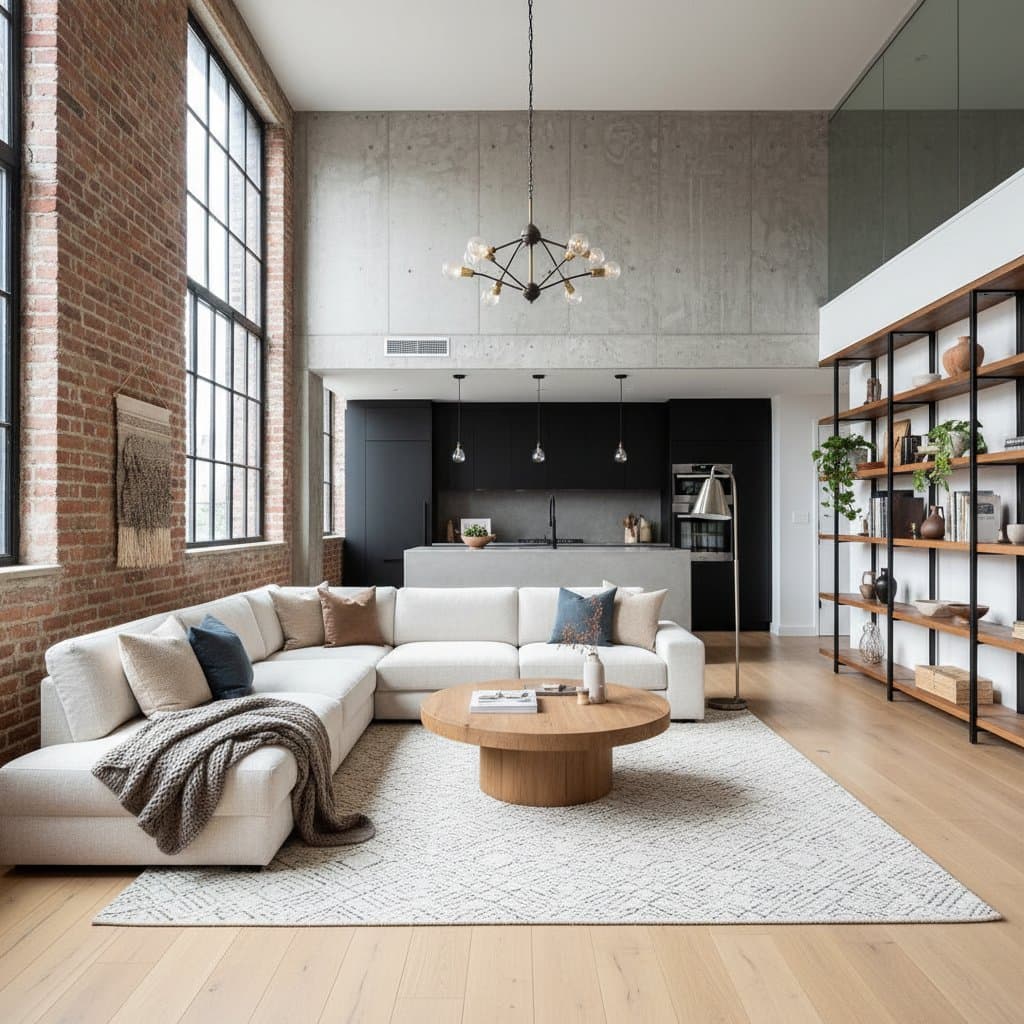
Industrial Lofts: Raw Meets Warmth in Design
Walk into an old warehouse, and observe cracked concrete floors, iron beams, and exposed brick walls. Some view these elements as rough and incomplete. Others recognize untapped potential. Industrial loft design converts such raw structures into warm, habitable environments that honor historical roots while prioritizing comfort. Individuals attracted to expansive layouts, genuine materials, and a fusion of durability with softness often find this aesthetic ideal for their residences.
Industrial lofts originated from functional adaptations of factories and commercial properties. Contemporary residents select this style for its spaciousness, distinctive character, and versatility. The primary difficulty involves harmonizing rugged surfaces with welcoming accents to maintain authenticity alongside habitability.
Understanding the Industrial Loft Aesthetic
The essence of an industrial loft centers on transparency in materials and architecture. Elements such as exposed brick, visible ductwork, steel components, and concrete remain unveiled rather than concealed by drywall or molding. These features emerge as intentional highlights. The appeal derives from juxtaposition: rigid substances complement plush upholstery, subdued hues pair with warm timber, and vast areas gain definition through designated zones.
This approach suits elevated ceilings and expansive windows most effectively, yet it adapts to compact dwellings through strategic use of palette, illumination, and tactility. The objective avoids a stark or sparse sensation. Instead, it accentuates artisanal quality and fosters ease via equilibrium.
Planning Your Industrial Loft Transformation
Prior to dismantling partitions or preparing masonry, allocate time for preparation. Industrial aesthetics appear spontaneous, yet they rely on deliberate integration. Consider these essential phases:
- Evaluate the framework. Inspect present components. Do the brick surfaces remain sound? Can structural beams expose without risk? In historic structures, engage a structural engineer to verify feasible exposures or removals.
- Outline functional areas. Open plans define industrial lofts, but distinct regions prove necessary. Employ furniture arrangements, floor coverings, or low dividers to delineate lounging, meal-taking, and productivity sectors.
- Choose materials thoughtfully. Maintain a unified selection including brick, concrete, timber, and metal. Emphasize tactile variety over chromatic diversity. For instance, position a matte black steel chassis adjacent to a salvaged oak surface for ideal harmony.
- Design illumination precisely. Opt for industrial pendants, rail systems, and metallic wall mounts. Pair them with incandescent sources to counteract the chill of alloys and stone.
- Incorporate softness deliberately. After establishing firm bases, introduce fabrics, foliage, and belongings. Such additions temper the environment and convey occupancy over display.
Material Choices That Define the Space
Industrial lofts embrace flaws. Marks, aging, and irregularities enhance genuineness. Every substance contributes to the ambiance.
- Brick: Uncovered brick serves as the hallmark. For existing walls, cleanse and protect rather than obscure. Absent originals, install brick cladding for comparable effect at reduced expense.
- Concrete: Buffed or tinted concrete flooring offers resilience and economy. Budget $4 to $10 per square foot based on treatment.
- Metal: Steel supports, wrought railings, and aluminum casings provide framework. Select ebony, silver, or satin variants for uniformity.
- Wood: Salvaged lumber infuses warmth and grain. Apply it to overhead spans, racks, and fixtures.
- Glass: Oversized panes or internal dividers preserve openness and luminosity.
Exercise moderation. Excessive patterns risk disorder. Select two or three primary substances and echo them across the area.
Balancing Raw and Warm Elements
An effective industrial loft avoids extremes of frigidity or excess ornamentation. Equilibrium remains the target. Establish the unrefined base, then superimpose solace.
- Apply color with purpose. Adhere to neutrals such as slate, ivory, and sand. Infuse vitality via tawny hides, timber highlights, or yielding textiles.
- Mitigate echoes. Stone and masonry intensify noise. Deploy mats, drapes, and cushioned pieces to dampen reverberations.
- Integrate eras. Place aged alloy perches near contemporary settees for dimension. Diversity enriches industrial settings, provided each item fulfills utility.
- Vary light intensity. Merge ceiling installations with surface and ambient sources. Adjustable controls enable ambiance and adaptability.
Practical Considerations for Homeowners
Industrial styling captivates, yet it presents distinct hurdles. Awareness of anticipations aids pragmatic foresight.
- Expenses: Transforming an area into industrial loft configuration spans $60 to $150 per square foot, influenced by treatments and baseline state. Authentic elements like recovered timber or masonry elevate outlays, though superior imitations achieve parallel outcomes economically.
- Duration: Comprehensive overhauls span months, particularly with framework alterations or electrical enhancements. Surface modifications such as simulated brick or fresh luminaires conclude in weeks.
- Authorizations: Structural, hydraulic, or wiring interventions demand approvals. Review municipal regulations prior to commencement.
- Security: Revealing legacy substances may reveal hazards like lead coatings or asbestos. Retain certified experts for inspection and abatement. Refrain from abrading or sectioning unidentified matters absent verification.
- Climate control: Expansive designs challenge uniform temperature regulation. Integrate overhead circulators or partitioned climate units for optimal ease.
Bringing Warmth Through Furnishings
With the groundwork complete, selections in fixtures and adornments impart individuality. Industrial lofts thrive on items merging utility with presence.
- Seating: Select robust, grounded loungers in hide or dense weave. Neutral palettes prevail. Supplement with cushions or covers for tenderness.
- Tables: Opt for recovered lumber low surfaces or alloy-supported meal boards. Shun lustrous coatings that appear too refined.
- Storage: Exposed racks with metallic supports or timber bins sustain cohesion. Enclosed cabinets in flat ebony or charcoal integrate seamlessly.
- Accents: Retro placards, broad reflectors, or nonrepresentational pieces introduce intrigue sans congestion. Limit mural elements to spotlight architecture.
- Greenery: Foliage animates the setting. Substantial container specimens or suspended varieties offset rigid planes strikingly.
Regional Adaptations
Industrial loft styling varies by locale. In frigid zones, install underfloor radiation and employ substantial weaves for insulation. In temperate regions, pale timbers and flax coverings promote ventilation. Littoral spots lean toward muted schemes and amplified daylight, whereas metropolitan settings accentuate alloys and deeper shades.
This flexibility renders the aesthetic versatile nationwide. Tailor grains, sources, and substances to align with weather and preferences.
Maintaining Your Investment
Industrial lofts mature elegantly under diligent upkeep. Renew seals on masonry and stone every few years to bar dampness. Clean alloy elements with gentle agents to prevent corrosion. Monitor drafts near broad openings, prevalent in lofts. Consistent attention safeguards substances and sustains an original, vibrant appearance.
Steps to Achieve Your Vision
Crafting an industrial loft transcends replicating displays. It entails equilibrating framework with ease. Initiate modestly if appropriate: unveil a single masonry face, adopt flat ebony fittings, or add select industrial illuminants.
For thorough renewal, collaborate with specialists versed in aesthetics and construction principles. Meticulous strategy guarantees security, productivity, and a culmination attuned to daily rhythms.