
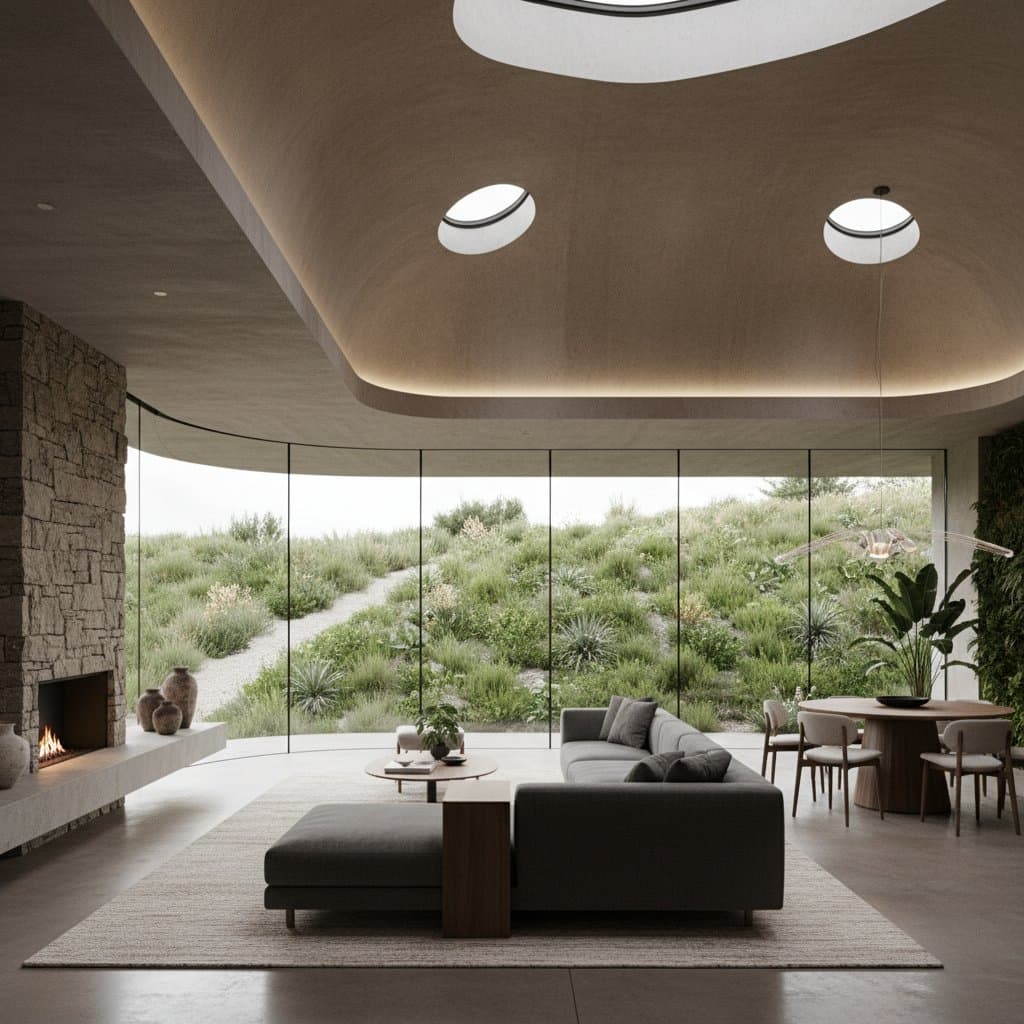
Luxury Redefined: Earth-Sheltered Underground Homes
Consider a home that serves as a secluded retreat, harmonizing with the landscape instead of dominating it. Envision entering a living room embedded in a hillside, where sunlight filters through expansive glass walls and the earth's gentle aroma maintains a natural coolness. Earth-sheltered underground homes transcend their former rustic origins. They now represent refined, eco-friendly havens that reshape the essence of upscale living.
The Hidden Appeal of Underground Living
Living below the surface may initially seem unusual. However, the tranquility it provides quickly reveals its allure. The surrounding earth protects the home from extreme temperatures, strong winds, and external disturbances. This natural barrier insulates interiors, maintaining warmth during winter and coolness in summer.
For individuals who prioritize seclusion and environmental responsibility, this architectural approach delivers both. Contemporary earth-sheltered structures merge sophistication with practicality. Visualize residences where verdant roofs merge seamlessly with undulating terrain, expansive skylights channel sunlight into core spaces, and utility costs decrease as the ground naturally moderates climate. Such homes foster a profound bond between built environments and the natural world.
How Earth-Sheltered Homes Function
Earth-sheltered homes employ the soil as a protective envelope. Construction methods involve either mounding earth against the building (bermed designs) or fully integrating the structure into the ground (fully underground). The overlying soil provides insulation and fortification, steadying internal temperatures and minimizing vulnerability to severe weather.
Two primary configurations exist:
-
Bermed homes: These structures rise partially above grade, with earth piled against side and rear walls. The forward-facing elevation typically includes broad windows oriented southward to capture passive solar gain.
-
Fully underground homes: These lie completely below the surface, often incorporating internal courtyards, light shafts, or atriums to distribute natural illumination throughout.
Adaptations suit diverse terrains, ranging from steep inclines to flat expanses. The underlying principle persists: harness the site’s geology to enhance the home’s efficiency and integration.
The Contemporary Luxury of Earth-Based Architecture
Modern luxury extends beyond opulent surfaces or premium fixtures. It encompasses the emotional resonance of a space and its alignment with the environment. Earth-sheltered homes instill a profound serenity uncommon in standard constructions. Solid earthen walls convey stability, balanced air circulation promotes well-being, and an inherent quietude satisfies those seeking respite.
Designers now fuse this organic base with advanced elements such as expansive glazing, structural metals, and salvaged timber. Picture sleek concrete surfaces adjoining organic, curved earth forms, or a recessed lounge area that flows into a secluded garden atrium. This interplay of raw and polished elements yields a layered visual depth, evoking both enduring tradition and progressive innovation.
Environmental Advantages Extending Past Visual Appeal
Subterranean living yields tangible ecological gains. The earth’s thermal inertia stabilizes indoor climates, diminishing reliance on mechanical heating and cooling systems. Homeowners often observe reductions in energy use by up to 80 percent, depending on climate and design.
The soil layer also guards against erosive winds and harmful UV radiation, prolonging the durability of building components. Integrated water strategies further enhance sustainability. Systems capture rooftop precipitation, directing it through filters for reuse in landscaping or household needs. Vegetated roofs cultivate indigenous flora, bolstering biodiversity and mitigating stormwater issues. Thus, the residence actively contributes to its ecological context.
Key Practical Aspects for Underground Construction
Prospective builders must address several essential elements before embarking on an earth-sheltered project.
-
Site evaluation: Assess gradient, soil permeability, and composition to gauge viability. Sloped sites prove advantageous, facilitating daylight access and effective drainage.
-
Structural reinforcement: Account for soil overburden with robust engineering. Reinforced concrete slabs or steel frames ensure long-term resilience against lateral pressures.
-
Moisture control: Implement impermeable barriers and perimeter drains to prevent infiltration. These measures safeguard against humidity buildup and structural degradation.
-
Illumination strategies: Counter potential dimness with strategic openings. Install clerestory windows, tubular daylighting devices, or reflective shafts to penetrate deeper interiors.
-
Regulatory compliance: Consult local ordinances, as requirements differ by jurisdiction. Engage specialists familiar with subterranean builds to secure necessary approvals.
Although these considerations demand attention, collaboration with adept professionals streamlines execution. Architects and builders versed in geotechnical principles guide from geotechnical surveys through final installations.
Initial Investments and Enduring Returns
Upfront expenditures for earth-sheltered homes typically exceed those of surface-level counterparts. Costs arise from earthmoving operations, fortified foundations, and advanced sealing techniques. Nevertheless, operational savings accumulate over time.
Lower utility demands, reduced upkeep on exteriors, and enhanced longevity offset premiums. For long-term residents, these factors often yield net financial benefits within a decade. Equally compelling are intangible gains: a residence attuned to its setting, delivering consistent comfort, acoustic peace, and seasonal adaptability.
Realizing Your Earth-Sheltered Design
Approach your project as a dialogue between terrain and ingenuity. Analyze solar paths and microclimates to align interior layouts with environmental rhythms. Partner with experts who balance performance metrics with stylistic flair.
Exemplary designs emerge not as concealed fortresses but as artful expressions via illumination, materiality, and spatial flow. Consider these concepts to shape your blueprint:
-
Central atrium: Position an enclosed garden core to illuminate and ventilate adjacent areas.
-
Vegetated upper surfaces: Sow drought-tolerant species to expand usable outdoor realms and camouflage the structure.
-
Transparent exposures: Incorporate floor-to-ceiling glazing on unobscured faces to infuse openness amid enclosure.
-
Site-responsive finishes: Select stone aggregates, earthen plasters, or recycled lumber to mirror local geology.
Steps to Launch Your Project
Constructing an earth-sheltered home demands foresight and expertise, but the outcome proves transformative. The result is a vital space that pulses with its surroundings, offering shelter wrapped in serene efficiency. Guidance from seasoned allies eases the journey.
Post your initiative on Doric South at no charge to connect with qualified builders attuned to subterranean methods. The platform’s verified experts provide reliable support from ideation to occupancy.
Luxury evolves toward subtlety and stewardship. Earth-sheltered homes embody this shift, crafting enduring elegance that sustains well-being and planetary health. They affirm that profound satisfaction arises from alignment, not extravagance—from a dwelling woven into the greater tapestry of the earth.